

 Filter by Popular Categories
 Filter by Popular Categories
Transition
Toolkit
B.C. TRANSITION TOOLKIT FOR NON-FAMILY FARM TRANSFER
About the Transition Toolkit
The Young Agrarians B.C. Transition Toolkit for Non-Family Farm Transfer is a resource kit for anyone curious about – or neck-deep in – alternative ways to transition land and farms from one generation to the next.
Young Agrarians has been offering land access support to farmers and farmland holders since 2013, when we launched our Land Access Guide and Land Linking Workshops. In 2016, we launched the B.C. Land Matching Program, connecting farmers and farmland holders and supporting the development of lease agreements. We’ve seen many creative approaches to solving the challenge of land access and farm transition over the past decade, and heard as many stories and questions from farmers who aren’t sure what approach to take. Our hope is that this toolkit supports your transition journey with information and inspiration.
Download the Transition Toolkit as a PDF from the button below, or browse the toolkit and download tools at the links in the Tools section.
Land Acknowledgement
This toolkit was produced by contributors living and working on unceded and traditional Indigenous lands and territories, including: Musqueam; Squamish; Tsleil-Waututh; Kwalikum; Snaw-naw-as; K’ómoks; Quw’utsun; Ktunaxa; Syilx (Okanagan); Sinixt; Gitxsan; Treaty 6 territory, home of the Cree, Blackfoot, Métis, Nakota Sioux, Iroquois, Dene, Ojibway/Saulteaux/Anishinaabe and Inuit; and Treaty 2 territory, the traditional lands of Anishinaabeg, Cree, Assiniboine, Dakota, and Dene Peoples, and the homeland of the Métis Nation. The three in-depth case stories were developed in collaboration with farmers living on the unceded territories of the Songhees First Nation, Syilx First Nation, and Tsq’escen (Canim Lake Band) traditional territory of the Northern Secwepemc te Qelmucw.
Young Agrarians recognizes the unresolved Indigenous land title and rights in the diverse territories in what is today called Canada. As we live and work in the context of and in response to a colonial system of laws and policies, it is important to acknowledge the historical and ongoing impact of agriculture and land enclosure on Indigenous lands and food systems. In this context, we acknowledge our collective responsibility to position Indigenous Peoples and their experiences with coloniality, in a narrative of reconciliation that places ecology, land stewardship, and Indigenous land title and rights at the forefront – if we are to sustain the Earth’s ecosystems in today’s rapidly changing climate.
“First Nations peoples’ have a special relationship with the earth and all living things in it. This relationship is based on a profound spiritual connection to Mother Earth that guided indigenous peoples to practice reverence, humility and reciprocity. It is also based on the subsistence needs and values extending back thousands of years. Hunting, gathering, and fishing to secure food includes harvesting food for self, family, the elderly, widows, the community, and for ceremonial purposes. Everything is taken and used with the understanding that we take only what we need, and we must use great care and be aware of how we take and how much of it so that future generations will not be put in peril.” Source: afn.ca/honoring-earth
The western science-based research and resource management system treats land as a commodity rather than a relationship and sacred honouring. It is not possible to reconcile the commodification of land in a colonial system that fails to value the land as ancestral, spiritual and cultural home, and the basis of our relationships to the natural world. As an organization working with new and young farmers to increase access to land and infrastructure needed to grow food, it is important to identify this contradiction. Further, as we live in an inherently complex regulatory environment within an increasingly inflated capitalist system of land speculation, any solutions we create to ensure the present and future generations can access land call for complex systems thinking. There are no simple solutions to land transition in the cultural, political and socio-economic context we live. Collectively, we need land to grow food and regenerate and protect ecosystems for a healthy future planet that can mitigate climate change.
This toolkit was created with the intention that, through the concepts and stories it explores, landholders and farmers will be able to envision future transitions for the land, and better understand the central nature of relationships to nurture future healthy food systems. In the context of Indigenous and settler groups working together, we believe that it is through relationships that cross-cultural spaces emerge and the giving back, reopening of lands for food provisioning and re-wilding of ecologies can be nurtured. It is our hope that there will be more pathways to reconciliation across these lands into the future. While this guide is primarily focused on options for land transition within the land title system, we will endeavour in the coming years to cultivate organizational capacity for working within cross-cultural frameworks to support farmers in our network to engage in decolonization and reconciliation processes through a relationship based approach, at the landscape scale as they are defined by Indigenous and naturally occuring boundaries – towards the goal of a transition to a just land and food system.
The Young Agrarians network emerged to support a new generation to care for and love the land. Many of the farmers in our network grow food and farm because of their environmental and social values; ecology is what is capturing people’s imagination and re-connecting them to the food system. The network works to facilitate knowledge sharing and community building to create the change we want to be. Our deepest hope is that the future of our food systems is diverse, interconnected, and resilient, embraces people of all walks of life and sustains the water, plants, and creatures in ways that benefit and work alongside Indigenous Peoples and narratives and ways of knowing and caring for the land.
Reconciliation & Decolonization Resources:
Transition Toolkit Acknowledgements
Young Agrarians Co-Founder & Executive Director: Sara Dent
B.C. Program Manager & Transition Toolkit Project Manager: Darcy Smith
Contributing Writers & Editors: Darcy Smith, Sara Dent, Dana Penrice, Tessa Wetherill, Hailey Troock, Jolene Swain, Azja Jones Martin, Alex Pulwicki, Ashlee Brillert
Photo Credits: Sara Dent, Ayla Amano, Tessa Wetherill, Michael Marrapese, COABC, Horse Lake Farm Co-op, Madrona Farm, Claremont Ranch Organics
Illustrations: Janice Wu | janice-wu.com
THANK YOU TO THE REAL ESTATE FOUNDATION OF BRITISH COLUMBIA FOR FUNDING THIS TOOLKIT

It takes a village to write a transition toolkit! Special thanks to Darcy Smith for being the lead project manager, writer and editor, and to the land matching team for nurturing its creation.
Thank you to all of the farmers, organizations, collaborators and funders who participated, and shared their knowledge and guidance. We are especially grateful to Madrona Farm, Claremont Ranch Organics, and Horse Lake Farm Co-op for sharing their transition stories in detail.
We couldn’t have compiled this toolkit without the excellent transition resources, expertise and contributions of Dawn Morrison, MNP LLP, Leonard Marriott at North Valley Law, Farm Credit Canada, Farm Management Canada, Elaine Froese, Practical Farmers of Iowa, Fenske Financial Consulting, Basin Business Advisors, B.C. Co-operatives Association, B.C. Foodlands Co-operative, B.C. Association of Farmers Markets, the Certified Organic Associations of B.C. and more. Thank you to L’ARTERRE in Quebec and Land for Good in the U.S. for their continued leadership in the farmland access and transition space.
Foreword by Heather Pritchard

My grandmother Anna Neufeld often said, both to comfort me and to put things in perspective, “This too will pass.” Of course, our time in this world is finite (she moved off the farm in her 70’s and died at 99), and the land, too, passes on.
Where someone in the family wants to continue to farm, it may stay a family farm – but it often gets complicated if other family members expect to receive a financial legacy that can only be realized by selling the land. The land is more vulnerable to being lost to food production when no one wants to farm. Indeed, it is increasingly rare that offspring are interested in continuing their parents’ farming tradition, and new farmers aren’t likely to be able to buy the land at today’s highly speculative and unaffordable real estate market prices.
How to make land available to new entrants into agriculture takes imagination and careful planning – but we do have choices when it comes to acquiring land. Across B.C. there are over 20 farms where land ownership is shared and there is more than one agricultural enterprise accessing it. We call these farms Community Farms and they are diverse. They may have been donated and put into trust, be owned by the municipality and leased out, be held by a faith-based community, or be a co-operative.
Take Fraser Common Farm Co-operative (a non-profit co-op) in the Fraser Valley where I live and Glorious Organics Co-operative (an agricultural worker co-op) that leases the land. We have been foraging for wild edibles in the woodlot, picking fruit from the orchard, intensively cultivating just over six acres of mixed greens, vegetables, berries, herbs and flowers, integrating chickens and sheep into our farming operation, and hosting tours, cultural activities, workshops, long tables and kids camps for over 35 years. More important, our members, diverse in age and skills, address the difficult issue of succession in a natural way. As people age the work they do changes to match their capacity and new co-op members take over the more physically demanding jobs.
When it seems unaffordable for even a co-operative to purchase the land, there is the option of acquiring it, by donation or purchase and putting it into trust. For this reason, we incorporated the Foodlands Co-operative of BC, a provincial land trust. We call it a foodlands trust, rather than a farmland trust, to honour and include Indigenous food systems, which are inclusive of hunting, gathering, fishing, and trapping rather than just production farming. This simple change in language expanded our mandate beyond production to the ecology of the land and all it provides. We became “stewards” not “owners” who take “responsibility” for the land instead of “managing” it.
This is just one example of the shift in perspective we will need to navigate land access challenges into the future: a shift in the way we think about land, a shift from commodity to community. There are solutions out there to transition land and farms to the next generation – and by and large the solutions mean coming together, bridging generations, cultures, and perspectives, and working together in new and innovative ways. If we work together, we can make it happen!
~
Heather Pritchard is committed to passing on the skills, land, partnerships, sustainable practices and biodiverse seeds to the next generation of farmers in B.C. She has been a leader in promoting different forms of land tenure that will allow people who want to farm to have access to land in the future. Heather is a founding member of FarmFolk CityFolk and is the founder and director of the Foodlands Co-operative of BC. She is a co-founder/farmer with Glorious Organics Co-op in the Fraser Valley and a resident member of Fraser Common Farm Co-operative, a community farm in the Township of Langley, B.C. where she has been farming since 1985.
Introduction
This toolkit grew from the stories we’ve heard from seasoned farmers struggling to see a way to pass their farm on to the next generation, and from the next generation struggling to find a way into agriculture. Our goal is to support the community with the information and inspiration needed to dig into non-family transition and develop plans that transfer lands, farm businesses and knowledge between generations.
Once upon a time, when a farmer was ready to retire and didn’t have a family successor, it was possible to sell the farm and/or business to a new farmer, who would continue the farming legacy of that land into the future. Today, land affordability is the number one challenge identified by new farmers.(1) North America is currently in the midst of what will be one of the greatest transfers of wealth in our time, which can be referred to as the Great Land Shift, where hundreds of millions of acres of North American farmland will change hands in the next two decades.(2) Many farmers are retiring without a family successor, and selling their farmland – most likely not to new and young farmers but to existing larger farms.
The number of farmers under 35 has been in a steady decline, but the 2016 Census of Agriculture saw the first national increase in young farmers since 1991.(3) People of all ages are turning back to food growing because they value local and healthy foods to provide for their communities. This exciting change holds hope for a future generation coming back to the land. However, the cost of land and farming has risen sharply over the past 30 years, putting land ownership out of reach for many new farmers. In B.C., the cost of land increased 5.4% in 2019, with land in the expensive South Coast and Okanagan regions valued at an average of over $100,000 per acre.(4)

New approaches are needed. South of the border, organizations such as Land for Good and Agrarian Trust have been working to ensure that there is a way forward during these crucial times for foodlands transition. It has also become normative for a new generation to lease farmland in Canada: 50% of farm operators 35 years of age and younger are leasing land. Leasing is one essential solution to addressing land access, while others are needed to address equity and land affordability for the next generation. Young Agrarians has offered land access programming since 2013, first through Land Linking Workshops and the B.C. Land Access Guide, then piloting Quebec’s land matching methodology in 2016 in the Metro Vancouver and Fraser Valley area, which in 2018 scaled up to the B.C. Land Matching Program, thanks to funding from the Province of British Columbia and regional funders. There are now land matchers supporting farmers and farmland owners across B.C.
The primary audiences of this toolkit are farmers without a family successor and farmers looking to transition onto a land base in B.C. Current and entering farmers will find a framework for understanding non-family transition, information about different models, and how to gauge which model fits your vision and needs. The case stories and other anecdotes in this toolkit are real-world examples of farmers making transition happen in a very complex regulatory environment – to ensure that what they’ve built with a lifetime of labour will not be lost to the next generation. Where there’s a will, there’s a way.
There are many excellent transition resources available in Canada. This toolkit is not intended to replace those, but rather to provide a complementary resource that highlights the non-family transition perspective. The six-stage process outlined here is designed to move you from setting your vision through the planning process to finalizing and maintaining your transition plan. Emphasis is placed on identifying what resources you need and when. Tools from other transition resources are included.
In this toolkit you will find:
- Models to transition the farm to the next generation, focusing on non-family transition
- Case stories to illustrate each model
- Financial, legal, and regulatory considerations
- Information about finding successors, interim planning, transitioning direct market customer bases, and more
- Worksheets to support your transition planning process, both from existing sources and developed / adapted with non-family transition and diversified farms in mind
- Legacy letters from current farmers
- Resources and referrals
The goal is for you to be able to:
- Learn about different models of non-family transition, and how to assess which models may be possible for you
- Understand what legal, regulatory, and social considerations exist
- Assess and document your vision, needs and next steps using the worksheets provided
- Develop a transition team through the resources and referrals provided
- Get inspired!
TERMINOLOGY
A note about language: you’ll see some words used interchangeably such as farm transition, farm transfer, and farm succession.
- Foodlands: “Foodlands” includes farmland as well as recognizing a diversity of food harvesting systems which may not fit in the more narrowly defined category of “farmland,” particularly food systems tended by Indigenous peoples.
- Farm Transfer: Passing a farm business and/or farmland from one generation or owner to another. Other related terms often used interchangeably are “farm succession” and “farm transition.”
- Farm Transition: The process of planning to transfer the ownership, management, and operations of an agricultural business to a successor. It is used interchangeably with succession. Transition/succession can include the transfer of land, farm business, or both from one party to another. This toolkit primarily uses the word transition.
- Current Farmer: The farmer who is on the land and planning for retirement with the goal of transitioning out of the land/farm business. For simplicity, this guide will refer to the “current farmer,” while acknowledging that there are often multiple current farmers involved.
- Entering Farmer: The farmer who is transitioning into a farm business/land opportunity (may also be referred to as the successor). For simplicity, this guide will refer to the “entering farmer,” while acknowledging that there are often multiple entering farmers involved.
- Land Access: Land Access addresses availability, appropriateness, affordability, security and findability, in pursuit of secure Land Tenure (land use rights).
- Landholder: The person, group, or entity that holds use-rights to land. Land can be held privately, publicly, or in “trust”. Landholders can be farmers (current or retired), farm families and their heirs, non-farmers, organizations, and various levels of government.
References
(1) BC Stats. (2019). New Entrants Needs Assessment.
(2) Agrarians Trust. agrariantrust.org/about
(3) Statistics Canada. (2016). Census of Agriculture. statcan.gc.ca/pub/11-627-m/11-627-m2017010-eng.htm
(4) Farm Credit Canada. (2019). Farmland Values Report. fcc-fac.ca/fcc/resources/2019-farmland-values-report-e.pdf
What is Farm Transition?
Transition is the ongoing process of transferring the knowledge, skills, labour, management, control and ownership of the farm business to the next generation. Transition is a process that takes time and effort to work through and develop a comprehensive plan that best meets the needs of all those involved.
The farm is going through a process of change and the goal is to figure out how to effectively manage and navigate that. The objectives are to transition the management of the agricultural operation, including building new management capacity, transfer farm assets (land, buildings, equipment and livestock), and develop a long-term plan to ensure financial security and peace of mind for both the current and entering farmer.
In transition planning, form should follow function. Transition plans should be firmly anchored in a clear and shared vision between the parties involved. Every transition planning process is unique, just like every farm is unique. A process that flows from vision to implementation, with clearly identified stages and make-or-break moments at each stage, might look something like this:

This toolkit starts out by asking you to consider and define your needs in Stage 1, before providing some potential frameworks as solutions in Stages 2 and 3. Once you are clear on your vision and needs, you can then go on to seek out or design the solution that will fit those needs. We recommend reading this toolkit in full before starting to work on the tools. This toolkit dives deeply into Stages 1-3; while we’ve included information and tools for Stages 4-6, it’s essential to have support from your transition team during Stages 4-6.
*Note that as life never moves in a straight line, you may need to circle back to each of these stages repeatedly. For example, if someone joins your farm, you’ll need to revisit the vision stage to bring everyone onto the same page. Or, you may assess feasibility early on by having a property assessed, but over a few years the property value changes and you need to revisit feasibility.
While we refer throughout to the “current farmer” and “entering farmer,” think about who else needs to be involved in transition conversations and decisions. This will be different for each situation, but may include extended family, employees of the farm, people throughout the supply chain, other community members, lenders, and, of course, professionals such as lawyers and accountants.
The next sections of the guide will move you through developing your vision to assessing your vision against different models, and finally to tools and resources that will help you move into the action plan and documentation stage.
HOW LONG WILL TRANSITION PLANNING TAKE?
All good things take time to develop. You can’t rush a seed to germinate! Transitions are times of change, exciting, new and sometimes destabilizing. There is extensive knowledge to transfer, a legacy to honour, and a steep learning curve for everyone. It’s a people-centered process, which means it can be complicated, emotional, and it won’t always be comfortable.
Your timeline will be unique to your farm, both in terms of the planning process and the actual transfer of knowledge and assets. The time from the first conversation to when the entering farmer is running things completely independently might take anywhere from one to 15 years. As humans, we love certainty and clarity; developing concrete timelines is essential and will support communication and provide you with a roadmap towards common goals.
Many farmers say that they’ve started thinking about transition too late, and it doesn’t feel like there’s enough time to let the planning process, relationship building and knowledge transfer unfold. And while we do recommend thinking about transition early (even as you are starting your business) it’s never too late. After all, they say that the best time to plant a tree was 20 years ago, and the next best time is today. Farm transfer is never really complete; even as you work towards one transition you are already planting the seeds for the next.
This toolkit can support you to create your transition road map, and develop timelines that, along with your vision, will bring clarity and help guide your process.
STAGE 1: Setting Your Vision

Both the current and entering farmer should develop their independent vision for land, lifestyle, finances, family, legacy, farming, etc. Then, conversations begin that centre on each party’s vision and move towards aligning on a common vision. Establishing clear, constructive communication at this stage is essential.
Before you can develop a vision for the future, you must orient yourself in where you are now. This will help you understand what your needs are, your next steps, gaps in skills or knowledge, and where you need support. Setting your personal vision starts before you initiate formal planning for transition, but your vision will likely need to evolve over time. It takes time to explore what is possible, so don’t rush this. Be honest and open with yourself and anyone else involved in the vision-setting process.

The different elements of your vision can explore finances, environmental stewardship, affordability, culture, legacy, community impact, etc. Your vision will become your anchor through the rocky seas of the transition process. It should answer the questions: what do you want, and what do you need the transition plan to give you? For example, “I want my land to keep being farmed” is different from “I need to keep farm status,” and similarly “I want to stay involved at a decision-making level” is different from “I need to be able to draw a base income of $X from the farm business to subsist on.” It may start broad, but should develop into something more specific and concrete.
Permaculture uses a concept called the eight forms of capital to broaden our understanding of the financial system to include non-monetary forms of capital. For example, relationships have social capital, and land has living capital that brings value beyond the price it commands on the real estate market. These eight forms of capital can be a helpful way to think about your personal vision. When outlining your personal vision, think about each form of capital and use that to express what is most important for you to achieve during the transition process:
- Social: the network of people that support you (e.g. friends, coworkers, family, neighbours)
- Material: non-living, physical objects that you have access to (e.g. house, fencing, tractor)
- Financial: money that you can use (e.g. savings, income)
- Living: all the living beings that you interact with (e.g. farm animals, soil organisms, forage)
- Cultural: shared internal and external process of a community (e.g. traditions, songs, art)
- Experiential: skills you acquire through practice (e.g. carpentry, butchering, bookkeeping)
- Intellectual: knowledge you gain (e.g. degree/certificate, taking courses, reading books)
- Spiritual: practices and beliefs that affirm your worldview (e.g. meditation, prayer)
- Read more about the eight forms of capital here: appleseedpermaculture.com/wp-content/uploads/2011/04/8_Forms_of_Capital_PM68.pdf
The following sections highlight considerations and questions for current farmers and entering farmers to help you reflect and begin to form your vision. At the end of this section you’ll find the tool “Setting Your Vision”, which is intended to help both current and entering farmers document their vision.
Embracing the Cycle of Change
To Future Generations: Legacy Letters
Considerations: Current Farmer
Considerations: Entering Farmer
Finding a Successor
Building a Common Vision: Communication and Relationships
RELATED TOOLS:
- SETTING YOUR VISION PDF | Word document
- WRITE YOUR OWN LEGACY LETTER
- COMMUNICATIONS ASSESSMENT
STAGE 2: Assessing Feasibility

At this stage, current and entering farmers assess the feasibility of their vision. What’s possible, considering the financial capacity and needs of each party? How much of the common vision is achievable? Where are there trade-offs? What model will provide the best framework for the vision? This section provides information about alternative transition models.
Non-Family Farm Transition Models Transition to Private Ownership
- Case Story: Vendor Take-Back Mortgage – Claremont Ranch Organics
- Case Story: Community Lending – Good Earth Farm
Transition to Co-Operative Ownership
Transition to Community Ownership
- Case Story: Putting Farmland Into Trust – Madrona Farm
- Case Story: The Combined Power of Co-ops and Trusts – Lohbrunner Community Farm
RELATED TOOLS:
STAGE 3: Making a Plan

The farmers know their vision and desired model, and are further exploring what structures will allow them to achieve that by looking at relationship structures, legal agreements, and financial supports. This stage is about identifying the solutions, and costing them out. The goal is for everyone to understand what is needed to facilitate the transition.
STRUCTURING YOUR TRANSITION
In the previous stages, you’ve set your vision and explored different models for transitioning the land and farm business. This section, Stage 3, explores the on-the-ground solutions that can help you achieve your goals. Transition plans take time to develop, and even longer to implement. During the transition process, it is helpful to have a clear understanding of the relationship between the current and entering farmer, and to put a formal structure around the relationship with agreements around business planning, land use, compensation/profit sharing, decision-making and exit strategies in case either party does not want to continue with the transition planning process.
The solutions you use will depend on the needs of the parties and the existing organizational set up. These may be viewed and implemented as interim solutions leading to eventual transfers of land and farm business ownership, or long-term solutions in themselves, depending on the visions established in Stage 1 and the decisions made in Stage 2.
Business Planning, Leasing, Employment & Diversification
Incorporation & Joint Ventures
Sweat Equity
Life Estate & Insurance
Transitioning a “New” Farm Business
Meeting the Unexpected
Building Your Transition Team
RELATED TOOL:
STAGE 4: Document

The first three stages of transition planning in this book are focused on visions, discussions, and exploring different options. At a certain point, you’ll arrive at decisions, and then it’s time to make it official by documenting your plan. Documentation is essential to a successful transition plan, from internal farm management documents such as Standard Operating Procedures and meeting notes, to official paperwork such as wills and leases.
This toolkit is primarily focused on the first three stages because what comes next – Documenting, Implementing, and Maintaining – requires more hands-on support from your transition team, including farmers and business support services such as lawyers and accountants.
It is essential by this stage to be actively working with transition and succession experts, and to ensure that your plans have been assessed for feasibility both against the questions posed in this toolkit, and against any relevant laws and regulations (Appendix A provides an overview of relevant legislation).
Here are a few elements of a transition plan that should be documented:
- Executive Summary: high-level description of your transition plan.
- Action plan with proposed implementation timeline.
- Asset transfer: address how farmland, buildings, and other assets will be conveyed from one party to the other.
- Management transfer: address how management tasks, responsibilities, and income will shift over time from one farm operator to another.
- Estate planning: direct the eventual transfer of assets, usually with the goal of preserving as much of the estate value as possible for the beneficiaries.
- Business plan: set out strategies for farm operations, personnel, marketing, finance, and business entity formation and continuance.
- Land use: map out land use options that address agriculture, forestry, and recreation uses as well as conservation and development.
- Retirement: address how and where the retiring persons want to live, their anticipated income, and health care costs.
STANDARD OPERATING PROCEDURES
Throughout the transition process, it is important to be clear on tasks: who is responsible for what, and how and when those tasks are done. In one example, the farmer grounds her transition process (in year 9 of 10) in the farm’s Standard Operating Procedures (SOPs): each year, the current and entering farmers meet to review the SOPs against their timeline and goals, and reaffirm how they’ll move forward over the next year.
A good Standard Operating Procedure (SOP) document consists of a simple, concise checklist of routine tasks around the farm, which allows for consistency, transparency and clear communication around farm tasks.
Developing or working with existing SOPs provides a common framework for how to do tasks on the farm, and a concrete reference point for the ongoing division of labour and decision-making. SOPs save time, help in training new employees, maintain quality standards and prevent mistakes and accidents. SOPs should be easily and quickly accessible to everyone, easy to follow and written simply and clearly, with diagrams and pictures wherever possible.
Start by thinking about jobs that get done frequently. Clearly define the task and then describe the steps involved in the process. Include as many details as possible, remembering that what might seem obvious to you, especially if you’ve done that task a million times, will not be for someone who is just learning. Make sure to involve all the people who perform the task in the creation of the SOPs and remember that these are living documents and can be amended and changed at any time.
Examples of tasks that may warrant a written SOP:
- Leafy greens washing, drying and packing
- Bookkeeping, paying bills
- Moving animals
- Water sampling
- Soil amendment application and management
- Monitoring irrigation equipment
- Sanitizing procedures for washup area
- Tractor and equipment operation and maintenance
- Any task that you want done efficiently and consistently…
A general format for an SOP might consist of the following parts:
- Title: What is a simple, clear title to identify the task?
- Objective & Purpose: What task are you accomplishing and why?
- Scope: Where and to whom does the SOP apply?
- Responsibility: Who is responsible for making sure the task is completed?
- Materials: What specific items are needed to complete the task?
- Procedure: What are the steps to the task, in order?
- Verification & Documentation: How will you verify that the procedure was completed correctly and what records will you keep?
RELATED TOOL:
STAGE 5: Implement

It’s time to turn vision into reality by handing over farm management tasks and decision-making, executing legal agreements, transferring assets, etc. *Note that implementation will be gradual, and interim planning is necessary to allow for a smooth transition process.
This is where it all starts to feel real! Implementing the transition plan is about taking all the hard work that you’ve put into dreaming, discussing, deciding, and documenting, and putting it into practice on the farm. This is the doing. As in the documentation stage, assistance from your transition team will be crucial to executing any asset transfers.
Remember that while this toolkit is set out in stages, this will probably not be a linear process. For example, if the entering farmer is leasing land as part of the transition, a lease document may need to be drafted and implemented in the early stages, and later, a land or business transfer may occur, as we saw in the story of Claremont Ranch.
CUSTOMER RELATIONSHIPS
Successful customer relationships are at the heart of successful businesses. Informing customers and nurturing these relationships during the transition period is crucial for a smooth transfer. Your approach to transitioning customer relationships will depend on factors such as the sales channel, people involved, role of relationships within the business model itself, transition timeline, and ways you communicate with customers.
Many farms sell their products through a variety of sales channels. Indirect sales occur when sales are Business-to-Business (B2B), and the customer is a buyer from a store or distributor, rather than the end consumer. Direct sales channels occur when a farm is selling directly to the person who consumes the products (B2C), and may include Farmers’ Markets, CSAs, farmgate and online sales.
Because a direct market customer base is more likely to be founded on personal relationships between the farmer and consumer, extra care should be taken in the transition process.
QUESTIONS TO ASK:
- What are the existing sales channels?
- How does the farm market to and communicate with the customer base for each sales channel?
- Who needs to be engaged during a transition?
STEP 1: GATHER CUSTOMER INFORMATION
The goal here is to understand the customer experience. Having a very good understanding of who your customers are, how they were acquired and their relationship to the current farmer will ease the transition process and hopefully help to mitigate any losses through this potential shift in customer base. The entering farmer must get this information from the current farmer – and it likely lives in the current farmer’s head, rather than a spreadsheet with customer segments.
The entering farmer should plan to do the heavy lifting by asking probing questions and taking notes. The current farmer can guide the entering farmer with information such as “This is what I grow and why, this is who buys my food, what they spend, and what they eat.” The current farmer has a lot of wisdom to share, and sometimes may not even realize how valuable a certain tidbit (e.g. the third weekend of August is always the busiest) will be to the entering farmer’s success.
STEP 2: BUILD RELATIONSHIPS AND SET EXPECTATIONS
Because personal relationships are so important to many small-scale farms, a transition plan should make use of every opportunity to build strong relationships between the entering farmer and the farm’s customers. That may mean taking the entering farmer along for deliveries to restaurants each week, co-hosting CSA pick up days or working markets together. Ensuring that the entering farmer’s name and face appear alongside the current farmer’s wherever possible, such as on marketing materials, and through personal introductions is advantageous when transitioning a customer base to a new farmer.
In-person interaction is a great way to build relationships, but it can be hard to keep every single customer informed one on one. Using channels such as newsletters and social media will help keep a wider range of customers engaged in your transition story.
Farmers’ Markets
Farmers’ Markets are an important sales channel for many small scale, diversified farms. In addition to transitioning the relationship between the entering farmers and consumers, the current farmer must also transition the relationship with the farmers’ market itself. A proactive approach to bridging the relationship with the entering farmer and the market is key to a successful transition.
Once there is a clear transition plan for the entering farmer to be involved at the market stall, and eventually take over the farm business entirely, the current farmer should talk to the market manager. It’s important to communicate timelines clearly. If, for example, the current farmer and the entering farmer plan to work alongside each other at the markets for a season, and the current farmer will transition out of the farm at the end of the year, conversations with the market manager should start prior to that market season. This way, you can involve the market in your discussions to increase the possibility that the entering farmer will be able to continue on as a vendor.
Generally, as long as a farm business name stays the same, a new business owner should not affect whether an established farm would continue on as a vendor; however, if the entering farmer is considering a name change, that could have an impact.
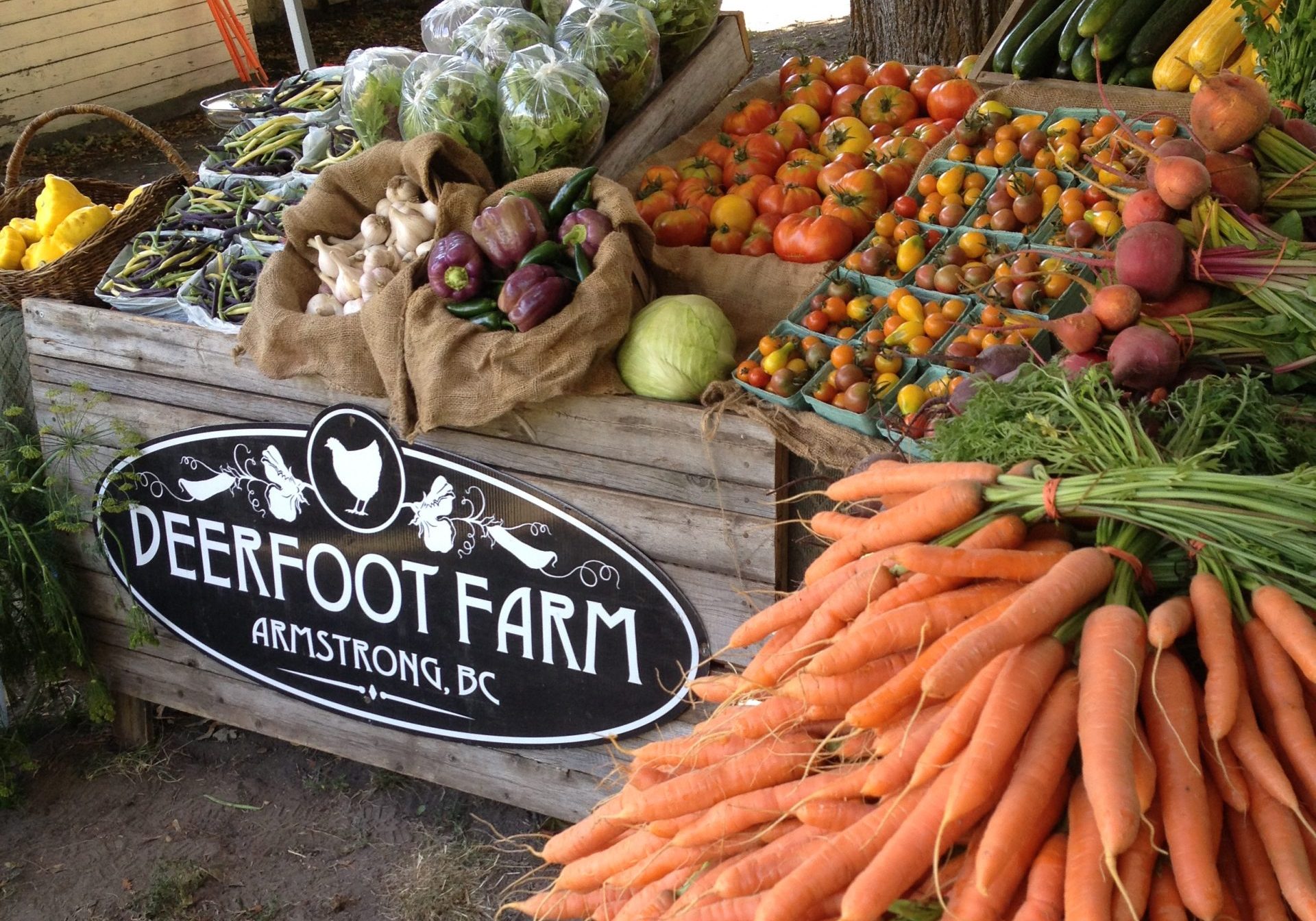
MINI CASE STORY: TRANSITIONING A CUSTOMER BASE – DEERFOOT FARM
Deerfoot Farm is a 56-acre farm in the North Okanagan that sells vegetables and pasture-raised chickens at local Farmers’ Markets. When Tessa began to lease land on Deerfoot’s property, she was also offered the use of the chicken barn and a list of customers. Upon taking over the chicken operation, Tessa wanted to make a few changes to the business operations; for example, she switched the chickens over to certified organic feed and pasture-raised them, which increased the price by $2/lb.
While the current farmer-landholders were concerned that their loyal customers would no longer be able to afford their chickens, Tessa was willing to take the risk. She knew she may lose some customers due to the price increase resulting from an increase in her cost of production. To counteract this risk, Tessa did her own marketing and expanded her activities at other places in order to get new customers that would pay that price point. For example, she found that her local CrossFit Gym was a great place to acquire new customers!
If there is a change happening, there will be change in how things are marketed; some customers will stay, some will fall off and some new ones will be found. Being clear and up-front about price increases is important. Similarly, Tessa found that communication was key to transitioning into Deerfoot’s stall at the local Farmers’ Market. It was important to ask for input from the Market Board on how best to proceed, being respectful of the old ways of doing things and clear about the farm’s current and future plans.
Deerfoot Farm’s market stand. Photo credit: Tessa Wetherill
Want to learn more about transitioning direct sales channels? Read the full “Transitioning Customer Relationships” article by Columbia Basin Land Matcher Hailey on the YA blog.
RELATED TOOL:
CALCULATING DISTRIBUTION OF LABOUR & PROFIT PDF | Word document
STAGE 6: Maintain Your Transition

As a transition plan is implemented, progress must be monitored, issues might arise and the plan may need to be modified. Regular check-ins are essential to evaluate and adapt as necessary. Flexibility is key.
For a transition plan to be successful, ongoing maintenance is essential. Just like crops need to be tended after planting, you must nurture your transition relationship. Setting up benchmarks at the beginning and reviewing regularly can support the health and performance of your transition plan. Think of it like a carrot bed: you’ve prepped the soil and planted seeds, and to ensure the best harvest, now you have to stay on top of weeding.
The following benchmarks may be part of your maintenance strategy. Decide together how you’ll evaluate the transition plan to determine what’s working and what may need to evolve.
Founders, family members and successors should all have copies of the transition plan.
Set up a timeline to review the plan and make any necessary adjustments
- When will you check in? Annually? Will you have more frequent informal check-ins?
- Who will set check-in dates and start the agenda?
- What will be reviewed and what tools will you use to review, such as your Standard Operating Procedures?
Reviewing the plan and the progress
- Is the plan being implemented?
- What has been done? What still needs to be done?
- Give credit where credit is due – celebrate the achievements!
Performance indicators
- Revenue/costs/output – what is the state of the business? How is it developing, along with the needs of farmers?
- Current farmers: Are financial needs being met?
- Entering farmer: Is the business plan feasible?
What if it isn’t going well?
- Is there a mutually-agreed-upon mediator to facilitate discussions and decision-making?
- What are the exit strategies? Have you defined under what circumstances the transition plan can be dissolved, and what that would look like for both parties?
BRINGING IT ALL FULL CIRCLE

Surprise – transition planning never really ends!
Congratulations on successfully navigating the six stages of non-family transition planning, both to current farmers who might actually have a pathway to retirement, and to entering farmers who are now in a position to think about what happens when YOU retire.
What’s next? For current farmers, that might mean transitioning off of the land, as the McCoubrey’s did when they purchased a new property and moved in, or it might mean stepping back entirely from the farm operation and watching from your porch as someone else does the early morning milking (you’ve earned the chance to sleep in!). For entering farmers, this may mean thinking about the next 5, 10, 30 years of life, and making decisions now that will set you up for a smooth transition when you find yourself in the role of “current farmer.” Maybe one of your children will take over, or you can use the lessons from this toolkit, and your own transition, to cultivate a non-family successor.

Whatever the future looks like for you, the tools, questions and considerations in this guide are worth revisiting time and again – to help you build stronger relationships with your family, your fellow farmers, and the wider farm community, from lenders and accountants to us here at Young Agrarians. Reach out for support, keep in touch – and please tell us your transition stories! land@youngagrians.org
APPENDIX A: Taxes & Regulations
As part of assessing feasibility (Stage 2), it’s important to understand any legislation and regulations that will impact your decisions. From local to provincial to federal, regulatory frameworks can provide a helpful guide to the most appropriate course of action, as well as inform you about potential risks, and options that just won’t be possible.
TAXES
CAPITAL GAINS
A capital gain results when an investment, such as real estate, is sold for proceeds greater than the original purchase price. Land in Canada is subject to a tax on capital gains during sale or transfer (presently, capital gains are taxed at 50% of the taxpayer’s marginal tax rate). Where certain conditions are met, there is a $1 million individual lifetime capital gains exemption (CGE) in respect of Qualified Farm Property. Portions of the property, such as the residence, if it was the principal residence for the owners, may be 100% exempt from capital gains. In addition, it may be possible to transfer Qualified Farm Property to family members on a tax-deferred basis, meaning that capital gains are not taxed until the farmland is sold to an unrelated party. With recent increase in land values, some landholders may be faced with a significant capital gains tax if they do not have a family successor and instead must sell their land.
Qualified farm property includes:
- farmland and buildings;
- interest in a family farm;
- shares in a family farm corporation; and
- quota.
Qualified farm property must meet the following conditions:
- used principally in a farming business by the individual, their spouse, child or parent (includes grandparents); or
- a family farm partnership or corporation of the individual, spouse, child or parent (can include grandparents).
- The determination of whether a particular property has been principally used in a farming business is a question of fact and the related rules are complex.
- It is essential to talk to an accountant to understand the tax implications before committing to any course of action in a transition plan.
What if the land is being leased?
Farm property may not meet the used principally criteria if the land is being leased or involved in a sharecropping arrangement, as this may be considered rental income. Whether you will qualify for capital gains exemption will depend on the nature of the business arrangement with non-family individuals. A custom work or joint venture agreement where you maintain control over key management decisions (where and what to plant, when to harvest, etc.) may meet the criteria. The expectation is that you have put in enough time, labour and attention to the business to contribute to the success, and assume any associated risks.
Considerations around Capital Gains Tax and Exemption
- The Capital Gains Exemption applies to the individual, not the property.
- Both the farmer and their spouse, if involved in the farm business, can qualify for the $1 million exemption, for a total of $2 million. Both spouses must own the property (be on title) to access both of their capital gains exemptions.
- If you’ve used a general capital gains exemption in the past, it may reduce your remaining exemption.
- When you sell your qualified farm property and use the capital gains exemption, other benefits that you receive may be affected. This can include Old Age Security pension (OAS), Employment Insurance (EI), Guaranteed Income Supplements (GIS) and your Canada Child Benefit (CCB). You may also be at risk of triggering Alternative Minimum Tax (AMT). How you defer or spread the recognition of a capital gain over time will impact which other benefits are affected.
- Through proper planning, with the help of professional legal and tax advisors, you may be able to realize significant tax savings when selling your farm property.
- Talk to an advisor, and plan ahead!
MORE READING ON CAPITAL GAINS:
- rbcroyalbank.com/business/pdf/Selling_the_farm_EN.pdf
- fbc.ca/knowledge-centre/how-your-farm-used-could-negate-capital-gains-exemption
- cafanet.ca/can-i-actually-sell-my-farmland-tax-free/
- mondaq.com/canada/Tax/679524/The-Capital-Gains-Exemption-Beware-Of-In-Law-Quirks
PROPERTY TRANSFER TAX
Property Transfer Tax (PTT) is a tax that you must pay if you purchase a property (or otherwise gain an interest in a property, usually through a long-term lease). Property Transfer Tax is not the same as annual property taxes, which are paid every year by owners to their local government.
When registering a purchase or interest in a property, a PTT return must be filed with the Land Title Office (LTO), and, if applicable, the PTT tax paid. Taxable transactions can include a right to purchase or agreement for sale, lease or lease modification agreements or crown grant, among others. On leases, PTT is generally owed if the total lease term (including renewal periods) is 30 years or more. If you are adding an entering farmer onto title that is not a family member then PTT would be payable on the percentage of the property that is being transferred.
The amount of PTT due is determined by the fair market value, or the price that would be paid by a willing purchaser to a willing seller for a property (land and improvements) in the open market on the date of registration. How fair market value is determined depends on whether the transfer was an Open Market or Non-Open Market transaction.
In Open Market Transfers, any interested party can make an offer and the purchase price would usually be considered the fair market value. When the transfer does not take place in an open market, the value is then determined by a recent independent appraisal or the BC Assessment property valuation. The current property valuation provided by BC Assessment isn’t applicable in all cases, including on land that is classified as farm land (class 9).
The valuation can be based on a number of factors, including recent transactions of similar property that can reasonably be used as a comparison and potentially the economic value of a property. In the case of a lease this can include the consideration of the value of a lease, but only if the lease rate is at market value. If it is lower than market rates, then the appropriate valuation will likely not be based on the cash flow generated on the property, but on the potential sale value only.
A lawyer or notary can assist with the process of completing the PTT return, since there are several things to consider. If the PTT return is incomplete or not paid on the date of registration, the LTO may refuse to register the purchase or interest. Some pieces of information you’ll want to have handy when going to file your return include whether or not the purchaser is an individual, corporation, or other entity. Questions involving trusts, beneficiaries, corporations and director information (if applicable) are covered.
MORE READING ON PROPERTY TRANSFER TAX:
- Read more: gov.bc.ca/gov/content/taxes/property-taxes/property-transfer-tax
- The Province of B.C. has an online tool to help estimate property transfer taxes: forms.gov.bc.ca/taxes/estimate-your-property-transfer-taxes/
LEGISLATION
Local, provincial, and federal legislation regulates many aspects related to farm transition, from on-farm practices and land use to income tax laws. At one point or another you may require another professional service regulated by provincial legislation. Regulations and associated bodies that may be relevant to farm business planning and transition include:
Local and regional bylaws: Local governments, whether municipalities or regional districts, are responsible for most land use regulations. Local bylaws may impact infrastructure and land use planning decisions in a transition plan. Municipalities and regional districts will be able to provide support or information surrounding community planning, agricultural advisory support, subdivisions, development permits, variance permits, OCPs and zoning amendments, temporary industrial or commercial use, to name a few.
B.C. Wills, Estate & Succession Act (WESA): The Wills, Estate & Succession Act (WESA) is a provincial statute that governs the law of inheritance in B.C. This statute is in effect when farmland is gifted to a new farmer through a deceased farmer’s will. Several provisions in WESA can affect the validity of a gift of farmland and can result in that gift being nullified. As a result, WESA should be carefully considered when making a will as a part of a transition plan.
Under WESA, surviving spouses and children can contest a will if it does not adequately provide for them. This makes it challenging to “disinherit” family members in B.C., and means it is essential that all members of the current farmer’s family understand and are onboard with the transition plan.
Courts have the discretion to consider and accept documents that do not meet formal will requirements but that express a will-maker’s wishes, and these documents can be used to either support or refute a gift made under a will. To best ensure that the intentions of a will are given effect, additional documentation, such as a deed of gift, should be considered to help support the gift.
Care must also be given when making gifts to spouses. First, marriage does not automatically revoke a prior will, so wills should be reviewed upon marriage to ensure they still reflect the intentions of the will-maker. Second, gifts made through a will to spouses in a marriage-like relationship with the will-maker may be nullified if it can be shown that the marriage-like relationship broke down prior to the will-maker’s death. Again, additional documentation may be needed to help support such a gift.
B.C. Agricultural Land Reserve: The Agricultural Land Commission (ALC) Act and Agricultural Land Reserve (ALR) Regulation are the legislative frameworks for the establishment, administration, and procedures of B.C.’s agricultural land preservation program. The ALR is a provincial land-use zone in which agriculture is recognized as the priority use, meaning there are specific land use rules, especially around non-farm use.
B.C. Farm Practices Protection Act (also known as the Right to Farm)
BC Assessment & Farm Classification
Ministry of Environment & Climate Change Strategy – Pesticides & Pest Management
APPENDIX B: Further Reading & Resources
Farm Transition Resources compiled with thanks to Farm Management Canada
MATCHING SERVICES
- B.C. Land Matching Program: Connecting farmers and farmland holders with land sharing facilitation support. youngagrarians.org/tools/land/bc-land-matching-program/
- FarmLink: Online tool to connect farmers and farm seekers. farmlink.net
- L’Arterre (Quebec only): Online tool to connect farmers and farm seekers. arterre.ca
- Successionmatching.com: Provides a space for farm owners to list their farm to attract potential buyers, and for potential farmers to find succession opportunities. successionmatching.com
WEB-BASED TOOLS AND RESOURCES
- Farm Transition Toolkit (forthcoming): Resources and tools to assess transition readiness, create your transition plan, find advisors and get inspired. farmtransitionguide.ca
- Choose Your Own Transition (forthcoming): Web-based assessment tool to determine your transition situation and options. Provides tools and resources for farmers looking to transition out, depending on their circumstances. chooseyourowntransition.ca
- Agriwebinar: Access more than 200 archived webinars searchable by topic (ex. transition planning) and speaker (ex. Elaine Froese). agriwebinar.com
- Elaine’s Farm Family Coach on YouTube. youtube.com/user/farmfamilycoach
- Elaine’s Farm Family Tool Kit: 19 tools that will help you communicate better and grow stronger on your farm. elainefroese.com
- FCC’s Let’s Talk Transition: Resources and tools to start the conversation, prepare for transition and start planning. fcc-fac.ca/en/resources/transition-planning.html
- 7 Steps to Farm Succession Planning: 7 online modules to walk you through transition planning basics. nsfarmsuccession.ca
- Transition Smart: Farm succession assessment tool from MNP. lp.mnp.ca/acton/fs/blocks/showLandingPage/a/25546/p/p-00d9/t/page/fm/0
- AgriShield: Assessment and planning tool to identify risks and best management practices. Includes a section on farm transition risk assessment and related components. myagrishield.ca
- Building an Effective Farm Business System: Guides producers through the development of a farm business management system. Includes worksheets and resources relating to farm transition. Includes sweat equity calculator. Wittmanconsulting.com
- AgriHR Toolkit: Online guide to building an effective HR management system. Includes advice related to transition planning. cahrc-ccrha.ca
- Alberta Agriculture – Transition Planning Guide for AgriBusiness – https://open.alberta.ca/dataset/a8b9d588-6855-4b5a-82fc-04345fc440c6/resource/e06b0e1b-3480-449b-8e19-dea59b051a6d/download/2016-transition-planning-guide-for-agribusiness-agdex-812-22.pdf
- Land for Good (U.S.) – Transferring the Farm: Where Do I Start? landforgood.org/resources/toolbox/toolbox-farm-families
- OMAFRA – Farm Succession Planning Steps and Checklist – omafra.gov.on.ca/english/busdev/facts/10-025.htm
- Holistic Management Canada. holisticmanagement.ca
- Donald Cooper Business Templates. donaldcooper.com
- Curt Ferguson, The Estate Planning Centre. tlcplanning.com
- BC Cooperatives Association: bcca.coop
- B.C. Ministry of Agriculture: Agricultural Co-operatives Start Up Guide: gov.bc.ca/assets/gov/farming-natural-resources-and-industry/agriculture-and-seafood/business-and-market-development/6877_agricultural_co-op_start_up_guide_web.pdf
- B.C. Ministry of Agriculture: Financing Agricultural Cooperatives: gov.bc.ca/assets/gov/farming-natural-resources-and-industry/agriculture-and-seafood/business-and-market-development/6877_financing_agricultural_co-operatives_booklet_web.pdf
CONFERENCES AND EVENTS
- Young Agrarians and B.C. Land Matching Program events. youngagrarians.org/events
- Agricultural Excellence Conference: Annual business management conference; Interactive, builds national network of experts and peers. fmc-gac.com/content/agricultural-excellence-conference
- Canadian Young Farmers’ Forum National Conference. cyff.ca
- Canada’s Outstanding Young Farmers National Event. oyfcanada.com
- FCC’s Ignite: Young Farmer Summit. fcc-fac.ca/en/knowledge/events/young-farmer-summit.html
- International Farm Management Congress: Biennial conference focused on farm management, includes farm and industry tours. ifmaonline.org
TRAINING & EDUCATIONAL PROGRAMS
- Getting Unstuck Online Farm Transition Course: Six module online course. elainefroese.com
- National Farm Leadership Program: For farmers and ranchers, takes place over 11 weeks online with a 3-day residency and a year of anytime one-on-one coaching and monthly coaching sessions. leader-shift.ca/national-farm-leadership-program/
- CTEAM – Canadian Total Excellence in Agricultural Management Program: For farmers and ranchers, takes place over 16 months through 4 online and in-person sessions. Build your farm’s strategic business plan including farm transition. agrifoodtraining.com/for-producers-cteam
- Alberta Family Business Institute – Passing the Torch | Not the Pain. ualberta.ca/business/centres/family-business/current-programs/passing-the-torch.html
PERSONALITY PROFILING
- Personal Style indicator – used by American Management Association. crgleader.com/assessments/personal-style-indicator.html
- Kolbe. kolbe.com/kolbe-a-index
- Style Matters: The Kraybill Conflict Style Inventory. riverhouseepress.com/style-matters-inventory
- Myers-Briggs Type Indicator. myersbriggs.org/my-mbti-personality-type/mbti-basics/
- CDP – Conflict Dynamic Profile: Assessment re: your conflict triggers – guide and sample report available. conflictdynamics.org
- Choice Map – How to have a learner, not judger approach. inquiryinstitute.com
FUNDING SUPPORT
- Canadian Agricultural Partnership: Provides funding for advisory services, event attendance and training programs. Check with your local Ministry of Agriculture for eligibility and to apply.
- FCC Farm Transfer Loan – fcc-fac.ca/en/we-finance/agriculture/farm-transfers.html
BOOKS
- Change your Questions, Change your Life by Marilee Adams. amazon.ca/Change-Your-Questions-Life-Leadership/dp/162656633X
- Tax Bulletin: Succession Planning for the Transition of the Family Farm by BDO. bdo.ca/BDO/media/AA-Publications/Succession-Planning-for-the-Family-Farmz.pdf
- When Sorry is Not Enough by Gary Chapman. amazon.com/When-Sorry-Isnt-Enough-Making/dp/0802407048
- The 5 Love Languages by Gary Chapman. amazon.com/Love-Languages-Secret-that-Lasts/dp/080241270X
- Safe People: How to Find Relationships that are Good for You and Avoid Those That Aren’t by Henry Cloud. amazon.co.uk/Safe-People-Relationships-Avoid-Those/dp/0310345790
- Boundaries: When to Say Yes, How to Say No, to Take Control of Your Life by Henry Cloud & John Townsend. amazon.ca/Boundaries-When-Take-Control-Your/dp/0310247454
- Good to Great: Why Some Companies Make the Leap… And Others Don’t by Jim Collins. amazon.ca/Good-Great-Some-Companies-Others/dp/0066620996
- Emotional Blackmail by Susan Forward. amazon.co.uk/Emotional-Blackmail-People-Obligation-Manipulate/dp/0060928972
- A Strong Warning to the 80-plus farmer by Elaine Froese. progressivedairycanada.com/topics/management/a-warning-to-the-80-plus-farmer
- Succeeding at Succession by David Irvine. davidirvine.ca/succeeding-at-succession-the-ultimate-test-of-organizational-success/
- Encouraging the Heart: A Leader’s Guide to Rewarding and Recognizing Others by James M. Kouzes, Barry Z. Posner. amazon.co.uk/Encouraging-Heart-Rewarding-Recognizing-Leadership/dp/0787964638
- Overcoming the 5 Dysfunctions of a Team (assessment tool) by Patrick Lencioni. amazon.com/Overcoming-Five-Dysfunctions-Team-Facilitators/dp/1501260308
- Stop Walking on Eggshells by Paul Mason. amazon.ca/Stop-Walking-Eggshells-Borderline-Personality/dp/1572246901
- Instant Influence: How to Get Anyone to Do Anything by Michael Pantalon. amazon.ca/Instant-Influence-How-Anyone-Anything-Fast/dp/0316083348
- Moolala: Why smart people do dumb things with their money (and what you can do about it) by Bruce Sellery. amazon.co.uk/Moolala-Smart-People-Things-Their/dp/0992158613
- The Gift of the Blessing by Gary Smalley and John Trent. amazon.com/Gift-Blessing-JohnTrent/dp/0840748493
- Silence is a form of violence – Crucial Conversations: Tools for Talking When Stakes Are High by Al Switzler, Joseph Grenny, Kerry Patterson, and Ron McMillan. amazon.ca/Crucial-Conversations-Talking-Stakes-Second/dp/1469266822
ARTICLES
- country-guide.ca/guide-business/family-through-succession-the-hunters-create-a-future/
- country-guide.ca/guide-business/pooling-resources
- country-guide.ca/guide-business/the-10th-generation-farm
- country-guide.ca/guide-business/succession-strategy/family-through-succession-putting-the-hunter-plan-into-operation
- country-guide.ca/guide-business/legal-insights-on-succession-planning-for-farm-businesses/
- familyfarmsuccession.ca/current-owners/no-successor-no-problem-2206
- country-guide.ca/guide-business/no-one-in-the-family-to-take-over-the-farm/
- producer.com/2011/12/what-if-there-is-no-successor-to-take-over-the-family-farm/
- bovinevetonline.com/article/4-options-farm-operation-without-successor
- fbfs.com/learning-center/how-to-plan-for-farm-and-ranch-succession-when-you-have-no-successor
- farmjournal.com/no-successor-no-worries-you-have-options
View More Transition Resources on the YA U-MAP: MAP VIEW | LIST VIEW
CASE STORIES:
Vendor Take-Back Mortgage
Community Lending
Turning A Farm Into a Co-Op
Putting Farmland Into Trust
The Combined Power of Co-ops and Trusts
TOOLS
Step01
- WRITE YOUR OWN LEGACY LETTER
- SETTING YOUR VISION PDF | Word document
- COMMUNICATIONS ASSESSMENT
Step02
- KNOWLEDGE & SKILLS ASSESSMENT
- TESTING THE MODELS Sample PDF | Blank PDF
(we recommend downloading the sample PDF first to review instructions)
Step05
- CALCULATING DISTRIBUTION OF LABOUR & PROFIT PDF | Word document
(we recommend downloading the PDF first to review instructions)
U-Map Resources
A national interactive Resource Map focused on centralizing information for new and young farmers from farms in the network, to available land, financial resources, farm suppliers and more. Add your resource to the map or find a resource. If you are mapping resources in your area, please get in touch!

LEGAL DISCLAIMER & WAIVER
The material presented in this publication has been prepared in accordance with generally recognized principles and practices and is for general information only. This information should not be used without first securing competent advice with respect to its suitability for any general or specific application. Young Agrarians, as well as any and all contributors to this document, make no representation or warranty of any kind, whether expressed or implied, concerning the accuracy, product, or process discussed in this publication and assumes no liability. Anyone using this information assumes all liability arising from such use. It is essential to seek professional advice, including legal and financial advice, during a transition process.
Thank you to the Real Estate Foundation of British Columbia for funding the B.C. Transition Toolkit for Non-Family Farm Transfer.