
British Columbia Business Business Mentorship Network Canada Farmer Profiles Flower Province / Territory West Coast - Islands
Business Mentorship Network – Notch Hill Community Growers
Posted on May 22, 2026

 Filter by Popular Categories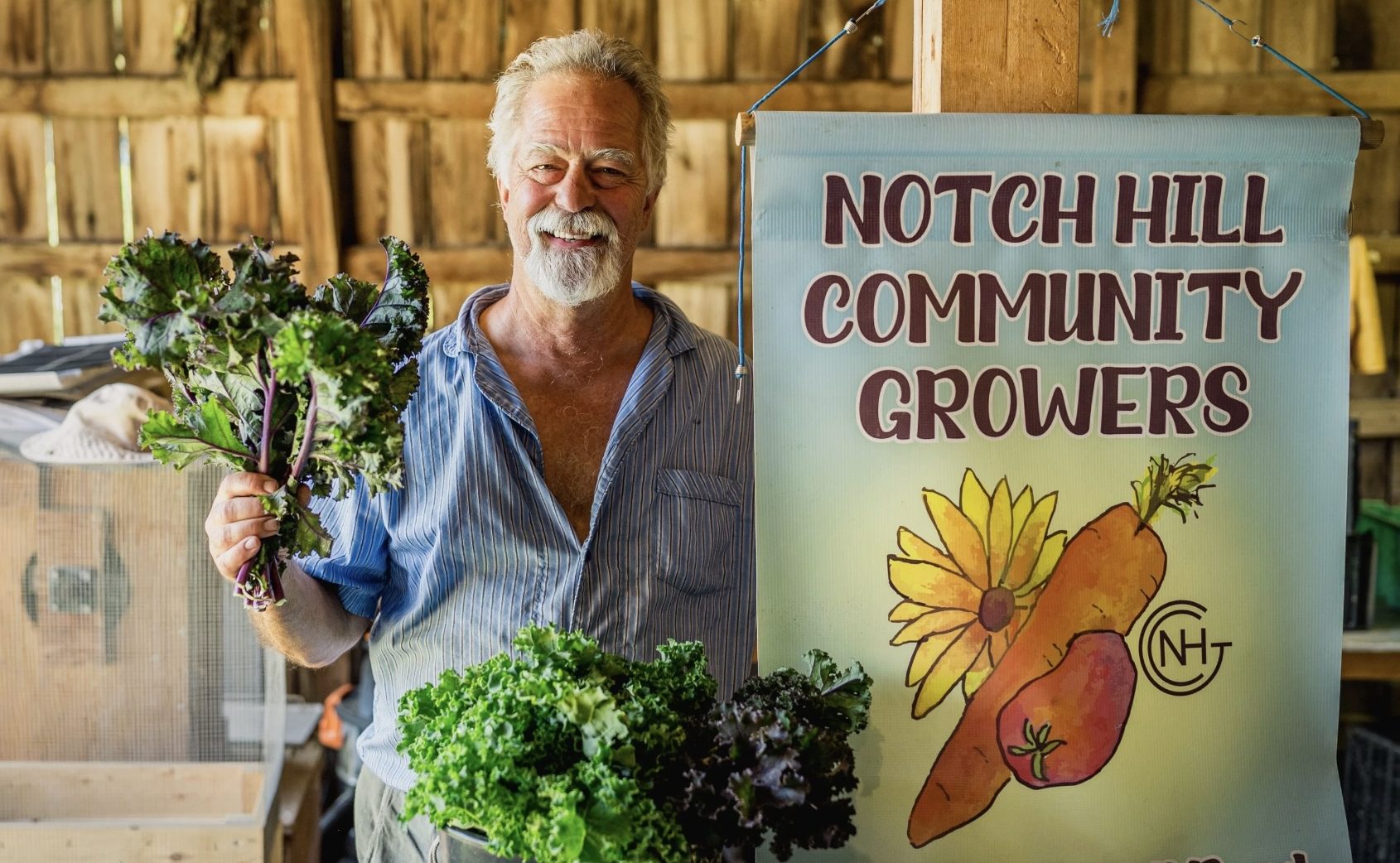
Posted on May 22, 2026
“The (BMN) mentorship has given us discussion, work, and thinking processes that have brought a lot of clarity to our decision making and our understanding of what we have and what we need to do to reach our goals.”
Young Agrarians is celebrating the twelfth year of the Business Mentorship Network (BMN) program in BC and the fourth year of the BMN in the Prairies! The BMN offers a year-long farm business mentorship to a diverse array of new and young farmers. Through one-on-one mentorship, peer networks, and online workshops, new farmers develop the skills necessary to operate ecologically sustainable and financially viable farm businesses.
Applications for mentees open in October 2026. Click below to be notified when applications open!
Mentor applications are accepted year-round. Check out the Business Mentorship Network page for more information!
Meet a mentee from the current cohort and learn about their farm and why they joined the Business Mentorship Network. Want more? Head over to our BMN Blog for more mentorship stories.
At Notch Hill Community Growers, we are an intergenerational team made of Ron Ste Marie, Jennifer Ste Marie, Damarise Ste Marie, and Duani Yano. Our Mentor is Frédéric Thériault from Tourne Sol Co-operative Farm, just west of Montréal in Québec. Our farm is located in BC’s Notch Hill Valley, an old CPR community near Sorrento in the South Shuswap, in traditional Secwépemc territory. We are in a rural area between Kamloops and Salmon Arm. The farm is currently a registered partnership and is owned by Ron and Jennifer, with Damarise and Duani working as employees.
How much land is under production on your farm and what do you produce?
Ron and Jennifer own the property and the farm is 126 acres of ALR land, including wetland, woods, and hillside. There are 4.7 acres under cultivation with food and flower crops. Of that, 3 acres are currently under production for a harvestable crop in 2026, with the remainder planted with young perennial fruits. Additionally, we have 10 acres leased for hay production. 50 acres of our property is pasture, either hayed or grazed. Finally, we have about 2 acres reserved for a proposed wetland restoration.
Did you access any financing to buy land or start your farm business?
This farm started in 2020 when Ron and Jennifer purchased the land to achieve their five-fold mission to farm regeneratively, increase biodiversity, address local food security, address climate change, and create community. They sold their house to buy the property, and are supporting the project with their pension and a mortgage. Damarise and Duani became involved in the farm in the past two years as part-time employees, and are now part of the team.
What inspired you to get into farming?
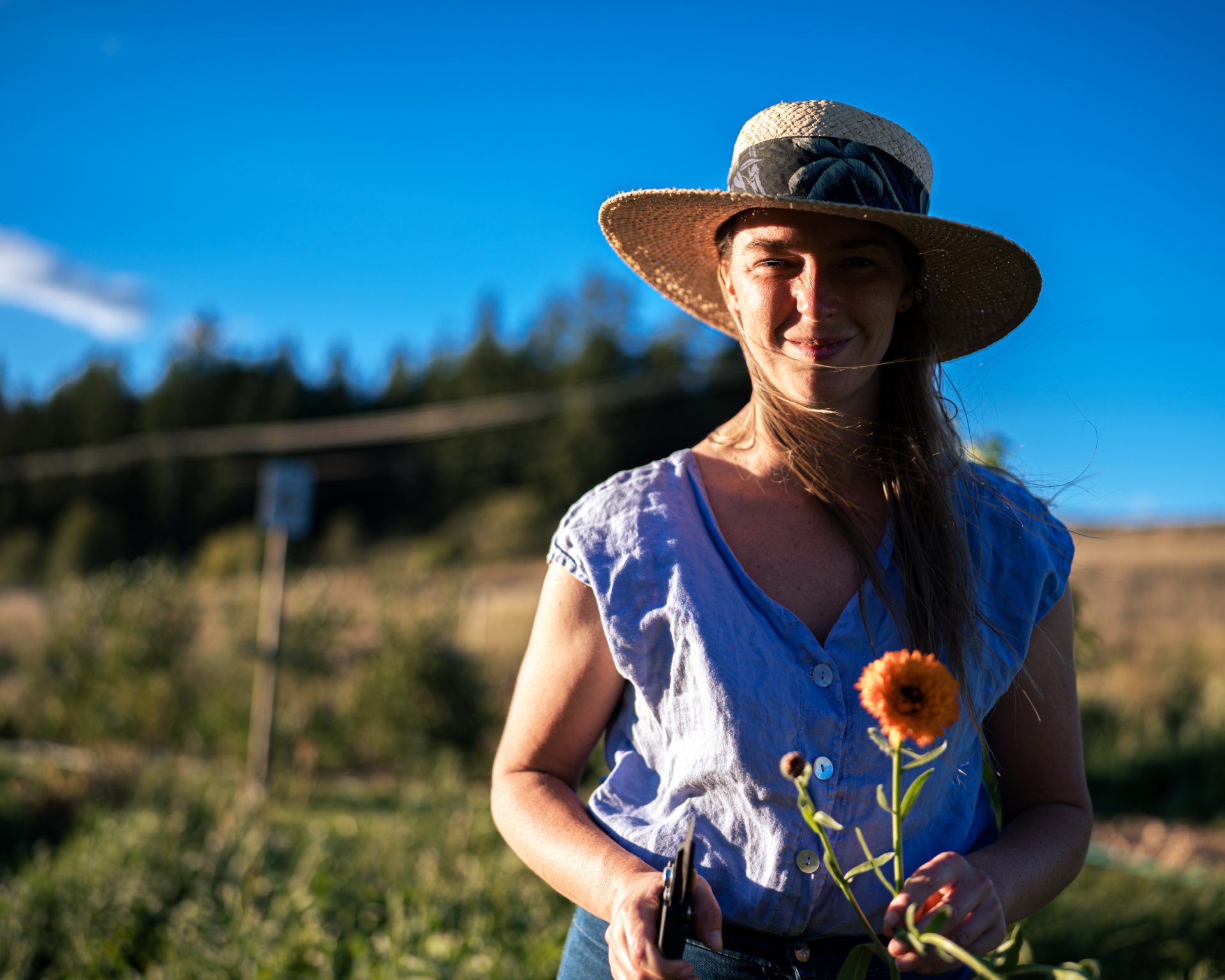
Ron and Jennifer were initially inspired by their Permaculture Design Certificate course, which offered a vision of a world where solutions, collaboration, and regenerative possibilities are abundant. Before their PDC, they were comfortably retired yet anxious about ecological and climate challenges. Damarise and Duani were inspired by the career possibilities of starting a cut flower enterprise. They are both life-long learners with creative impulses who like working outdoors, which is a good fit for farming. Damarise has always enjoyed growing flowers, and has completed most of her Master Gardener’s Course; however, she didn’t have any plans to become a farmer before the opportunity landed in her lap. She has worked as a dance artist since 2010. Duani’s family owned a cattle ranch in Brazil many years ago, and he is excited to get back into land-based work. His training includes chef school, physiotherapy school, and supply chain management school – this is a great opportunity to combine all his training in one career path.
How did you learn how to farm?
Ron and Jennifer began their farming adventure in their old backyard, learning to grow perennial fruits, veggies and ornamental plants. They also were volunteers for a time at the Sorrento Centre Farm. Their PDC brought them into contact with many people and communities who have a farming focus. And, when they bought Notch Hill Community Growers, they learned with the previous owner for a season before setting out on their own. Damarise gardened at Strathcona Community Garden in Vancouver for three seasons, and has helped at Notch Hill since 2020. Last year she stayed at the farm for most of the growing season. Duani previously worked at his family’s cattle ranch, and spent time at Notch Hill the past two summers, learning to grow seasonally in Canada’s climate.
What types of ecological farm practices and/or responses to climate change realities do you engage in?
At Notch Hill Community Growers, we use low-till and no-till methods, and we farm largely manually. We avoid all use of herbicides, pesticides, fungicides and insecticides. Instead we plant a diversity of crops as well as pollinator-friendly plants, in keeping with permaculture principles. We have planted a variety of perennial fruit crops, to learn which ones will withstand climate stresses in our region, including extreme summer heat, drought and fire, and fluctuating winter temperatures. We are installing passive water retention measures on our hillside, to address drought pressures in the area. We have also planted a xeriscape garden and a Miyawaki Forest as demonstrations to inspire our community and clients to plant on their own properties using regenerative and resilient practices. Finally, a part of our property is reserved for a future wetland restoration project, with goals of adding to the region’s biodiversity and increasing fire resistance.
Why did you apply for business mentorship? What are your primary business goals for the season?
The Young Agrarians Business Mentorship program is supporting our farm to transition into a successful business venture. We intend to create financial resilience in the farm business to match the ecological resilience we are creating on the land. Damarise and Duani are joining the project fulltime, and they need to earn an income on the farm in order to be involved, so it has become essential to create a strong business plan. Our goals for this season are as follows:
1. Production: gaining knowledge and tools for efficient crop planning, succession planting, cultivating, harvesting, and processing of farm products.
2. Admin: gaining skills and effectiveness in record-keeping, book-keeping, customer communication, etc.
3. Optimizing Systems: creating and improving standard operating procedures from seed to sale, to ensure success of employees, allowing us to each work a maximum of 40 hours per week.
4. Marketing: increasing brand awareness through presence at farmers markets, printed posters and road-signs, social media, and direct conversations with residents, tourists, and local businesses.
5. Revenue: achieving $50K of gross revenue in 2026, with ⅓ of sales from cut flowers, ⅓ from food crops and ⅓ from bedding plants. Additional revenue will come from events and workshops. Future growth will largely come from expansion of flowers and perennials.
What is the greatest challenge you face as a new farmer?
None of us has experience running a business as a team, so we are all learning a lot in this area. We also are learning how to market our products effectively, how to strategically crop plan to match our income goals, how to set up efficient systems, and how to divide and delegate tasks and responsibilities in an effective way. We really are learning everything about farm business, which is very different from gardening and everything else we’ve done professionally!
What business tools or resources could you not live without?
The Young Agrarians has been so helpful for us this year. The Business Bootcamp in the fall brought us a good awareness of the basics. The Mentorship Network webinars and Q&As have all had excellent insights. The mentorship itself has given us discussion, work, and thinking processes that have brought a lot of clarity to our decision making and our understanding of what we have and what we need to do to reach our goals. This resource, coupled with our New Entrant Farm Business Accelerator consultation supported by the BC government, has helped us get information and goals written and recorded in ways that are easy to see, understand, interpret, and implement.
How can we find out more about you, your farm, and its products?
We are planning to attend the Chase and Sorrento Farmers’ Markets this season. We will also experiment with going to the Salmon Arm Farmers’ Market on alternate Saturdays during July and August. Please check us out directly at our farm as well – we have Tuesday afternoon Farm Gate sales, and we will also construct a new Farm Stand for self-serve options throughout the week. Notch Hill Community Growers has a website, instagram and facebook page:
W: https://notchhillcommunitygrowers.com/
I: https://www.instagram.com/shuswapcutflowers/
F: https://web.facebook.com/stemariefarm