

 Filter by Popular Categories
 Filter by Popular Categories
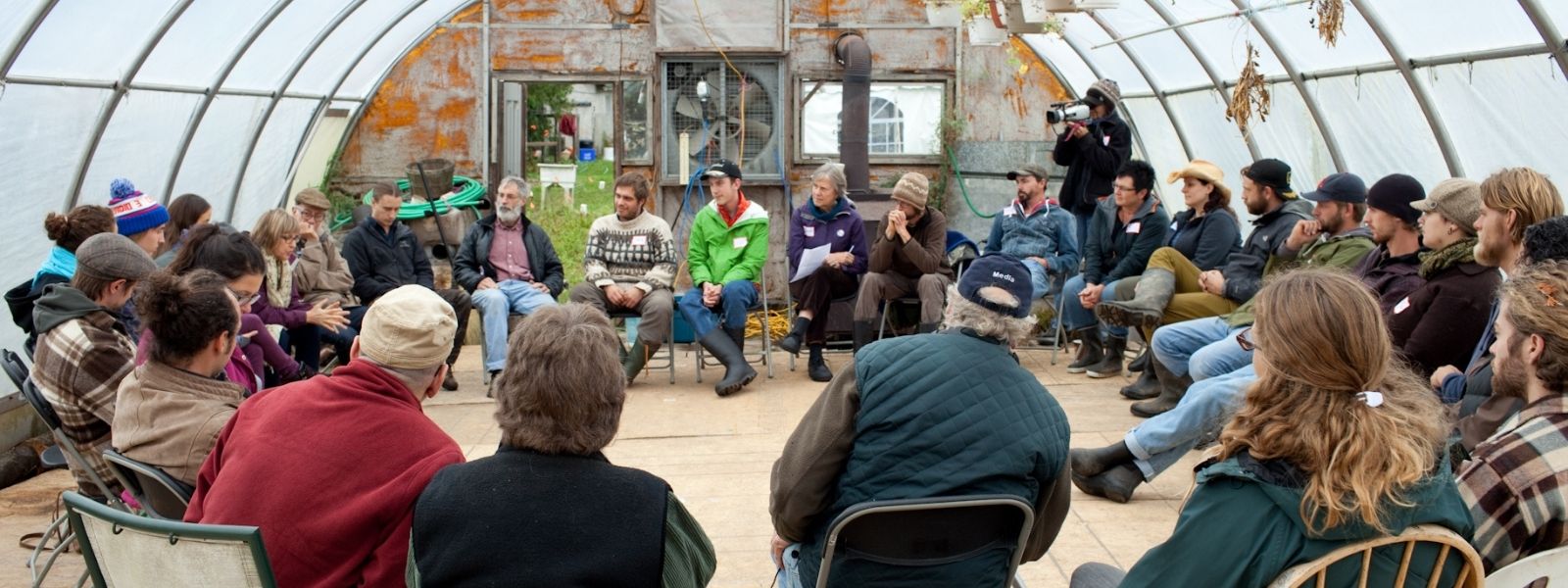
Shaping the Future of Agriculture - New Farmers, Local Food Systems and Canada's Agricultural Policy Framework
Prepared by Young Agrarians and the Ecological Farmers Association of Ontario
This is a moment for change! We need your voice to help shape the future of agriculture in Canada.
The Canadian Agricultural Policy Framework is the main funding framework for programs and services for farmers across Canada. Consultations are underway towards the Next Policy Framework (NPF) – this means that the next few months are a very important time for farmer voices and advocacy!
Young Agrarians and the Ecological Farmers Association of Ontario (EFAO) believe that priority areas for the Next Policy Framework should include:
- Generational renewal: A coordinated strategy is urgently needed to support new farmers and inter-generational farm succession to ensure that we have food sovereignty into the future.
- Local food system development: While Canada’s agricultural policy has historically prioritized export market development and support for large scale agriculture, we would also like to see support for local food systems and small/medium sized enterprises prioritized in the NPF.
YA and EFAO have put together this guide with suggested talking points to help you fill out AAFC’s public consultation survey, which closes June 30, 2026. Make your voice heard!
How to Use This Guide
Step01
Open Consultation Survey
Open AAFC’s NPF Consultation Link & fill out demographic questions on the first page.
Step02
Use/Adapt the Suggested Talking Points
Use the suggested talking points below as a guide to answer the core consultation questions. Copy, paste & edit those that you relate the most with, and/or come up with your own answers.
Step03
Submit & Share
Once you are finished, submit the consultation and share! Encourage as many farmer friends as possible to participate in the consultation.
Frequently Asked Questions about the Agricultural Policy Framework
What is the Canadian Agricultural Policy Framework (APF)?
The Canadian Agricultural Policy Framework (often called the “APF”) is a multi-year agreement between the federal, provincial, and territorial governments that sets the direction for agriculture and agri-food policy in Canada. It outlines shared priorities, funding commitments, and programs designed to support farmers, strengthen the food system, and drive innovation and sustainability.
These frameworks typically run for five years and are renewed regularly. The current framework is the Sustainable Canadian Agricultural Partnership (SCAP), which runs from 2023–2028.
The Next Policy Framework (often called the “NPF” or the “next APF”) will run from 2028-2032. Consultations are underway towards the NPF as the federal government begins the multi-year process of negotiating the next framework.
How and when is the APF negotiated?
Agriculture is one of the only policy files that has shared jurisdiction between the federal and provincial/territorial governments. The Agricultural Policy Framework is therefore co-developed through federal, provincial and territorial (often called “FPT”) negotiations.
These negotiations determine:
- Priority areas (e.g., climate, competitiveness, resilience)
- Funding levels (cost-shared between the federal and provincial/territorial governments)
- Program design and delivery (some federal, some provincial)
Before and during negotiations, governments gather input from stakeholders—including farmers, industry groups, and the public—through consultations and surveys.
The federal, provincial and territorial (FPT) Ministers of Agriculture meet in person every year, usually in July. At their FPT summit in July 2026, they will adopt a “Policy Statement” that will outline high-level priorities for the Next Policy Framework. Funding levels and program design will then be negotiated over the following 18 months to ensure that they accomplish the goals set out in the Policy Statement. This means that the next few months are a very important time for farmer voices and advocacy!
The Policy Statement adopted in 2021, leading into the development of the current Sustainable Canadian Agricultural Partnership, was called the Guelph Statement. The priority areas outlined in the Guelph Statement were:
- Building sector capacity, growth and competitiveness
- Climate change and environment
- Science, research and innovation
- Market development and trade
- Resiliency and public trust
Young Agrarians/EFAO believes that priority areas for the Next Policy Framework should include:
- Generational renewal: A coordinated strategy is urgently needed to support new farmers and inter-generational farm succession to ensure that we have food sovereignty into the future.
- Local food system development: While Canada’s agricultural policy has historically prioritized export market development and support for large scale agriculture, we would also like to see support for local food systems and small/medium sized enterprises prioritized in the NPF.
What types of programs are included in the APF?
The APF funds a wide range of programs that generally fall into two categories:
- Business Risk Management (BRM) programs
These help farmers manage financial risks beyond their control, such as:
- Income declines
- Crop losses
- Natural disasters
Examples include income stabilization, crop insurance, and disaster assistance programs.
- Strategic Initiatives (FPT cost-shared and federal programs)
These support longer-term sector growth and priorities, such as:
- Environmental sustainability and climate action
- On-farm innovation and technology adoption
- Market development and trade
- Food safety and traceability
- Regional and sector-specific initiatives
This document overviews the federal and provincial programs included in the SCAP.
What is NOT included in the APF?
Some important agriculture-related issues fall outside the Agricultural Policy Framework and are handled through other laws or policy areas, such as:
- Supply management and pricing systems (e.g., dairy, poultry, eggs)
- Trade agreements and international market access
- Tax policy and financial regulations
- Labour and immigration policy (e.g., farm labour programs)
- Land use planning and zoning (often provincial/municipal)
- Environmental regulations and legislation (separate from incentive programs)
While the framework can support these areas indirectly, it does not set the rules governing them.
Why is it important to participate in the APF consultations?
Consultations are one of the main ways governments hear directly from farmers,especially new and underrepresented voices,before setting priorities for the next framework.
Participating matters because:
- It shapes funding priorities: Your input can influence where billions of dollars are invested.
- It ensures relevance: Programs are more useful when they reflect real on-the-ground challenges.
- It amplifies new farmer perspectives: Young and early-career farmers often face different barriers (e.g., access to land, capital, and markets).
- It strengthens the sector’s future: Policies built with farmer input are more effective, inclusive, and forward-looking.
In short, consultations are a rare opportunity to directly influence the policies and programs that will affect your farm business for years to come.
AAFC is the most lobbied department in the entire federal government – so it’’s important that as many farmers as possible participate directly in the consultation to make our voices heard!
Links to Agriculture and Agri-Food Canada's announcements about the consultation
News Release: Minister MacDonald launches consultations for the Next Agricultural Policy Framework

Suggested Talking Points for the Consultation Survey
SURVEY QUESTION 1: FPT governments are hearing that stakeholders would like us to focus on areas such as markets and trade, growth and competitiveness, and resiliency. Do you agree with these priorities, or are there others?
TALKING POINT 1: General
I do not agree with these priorities, and I find them too vague. Instead I think generational renewal, indigenous food sovereignty, land protection, capital access for farmers and rural revitalization would be more relevant to ensure the viability and resilience of farming moving forward.
TALKING POINT 2: Generational Renewal
Supporting new farmers has reached a critical stage in Canada and needs to be placed amongst the highest FPT priorities. Without ensuring the next generation of farmers is supported amidst an environment of record high land prices, low net farm incomes and soaring input prices, Canada’s long term food sustainability and competitiveness is at risk without safeguarding and facilitating the secure transfer of land to the next generation of farmers.
Speak from your experience – link your personal experience to the government’s stated priorities, and what is missing from their priorities. Example: “Resilience is important to me. Resilience for me means being able to farm using sustainable practices, and that means having secure land access. As a first generation farmer, accessing land was very complex. It took me a long time to find a secure spot to farm with a five year lease, and appropriate housing. I believe that FPT’s should address the land access challenge.”
SURVEY QUESTION 2: In your view, what should be the top priorities for the Next Policy Framework?
Talking Point 1: Generational Renewal – Generational renewal should be a top priority for the NPF considering the current farm renewal crisis in Canada. By supporting new entrants in agriculture we can bolster domestic and local food production, reduce dependence on long supply chains, mitigate carbon emissions, and cultivate resilience against climate change and geopolitical uncertainties. Access to land, capital and infrastructure are top barriers affecting the next generation. In order to have growth and development of the agricultural sector we need to ensure that we have new and young farmers who can access land and produce food for our populations.
Talking Point 2: Canadian Food Sovereignty – Development of and investment in local, regional and domestic supply chains is essential, especially with the current trade instability. Canada must ensure that it has food sovereignty and must invest in domestic and regional economies. The NPF should invest in growing the number of new farmers, and in wrap-around services and supports for local food production (including processing, distribution and market development).
Speak from your experience: Example: “As a farmer trying to feed my community I constantly see money, services and programs going to support larger farmers focused on feeding the world but don’t often see programs geared towards me and my farm seeking to grow more food to feed the communities around me. Local food development, new farmer supports, extension services, and infrastructure and program development which is scale-appropriate would go a long way to support me and my farm.”
SURVEY QUESTION 3: Given recent challenges and unpredictability facing the agriculture and agri-food sector, what do you see as the issues, both current and emerging, that are creating the most pressure for the sector? What do you see as the greatest opportunities for the sector?
Talking Point 1: Barriers to New Farmers – Access to land, access to finance, knowledge and training, and rural community development have been identified as the largest challenges facing new farmers, today. By prioritizing new farmers in the NPF and providing necessary, holistic support to all farmers and farm workers, Canada can ensure lasting generational renewal in Canadian agriculture.
Talking Point 2: Farm Succession Supports – We are facing a succession crisis in Canada, with 60% of farmers 55 years of age or older and a loss of 70% of young farmers since 1991. These facts from Statistics Canada combined with only 12% of farmers having a succession plan means that generational renewal of our farms is increasingly critical for the future. Canada will be unable to maintain our level of domestic and international food production without the development of programs that address the aging farm population and bring new people into the sector.
Talking Point 3: Canadian Economic and Food Sovereignty – Increasingly volatile trade and global economic and climate conditions are putting food supply chains at risk. We need to increase the amount of food that is produced, processed, and consumed within Canada to improve our economic resilience. In order to increase the amount of food produced for local/regional/domestic value chains, we need to increase support for new farmers producing for those markets. Historically, AAFC’s work on market development has focused almost exclusively on export markets, but we urgently need major investment into local and regional food production and value chains.
Speak from your experience – Example: “I saw during the Pandemic and also recent trade wars with the USA how the cost of living, farm inputs and cost of groceries increased. We currently have a system which relies on imported farm products even though farmers like myself can and do produce them in Canada. In order to better weather global shocks we need to support Canadian farmers to produce more food for Canadians.”
SURVEY QUESTION 4: How can FPT governments best work with producers and processors through the NPF to address these challenges and help advance sector priorities?
Talking Point 1: Equity in Consultations – Prioritize the voices of farmers, not just large corporate interests. Providing time and space for a diversity of farming voices to come together and reach consensus on sector priorities would be an ideal way to engage genuinely with food producers and processors, making sure priorities are in fact farmer-led. Furthermore, allowing for equitable compensation during consultations would greatly reduce barriers and provide needed recognition to farmers who already face many barriers to accessing these spaces.
Talking Point 2: Address Root Causes – Recognize that the market failure conditions in agriculture (market prices for farmland exceeding the productive capacity of the land in many parts of the country) is the primary cause of the generational renewal crisis in agriculture, and the primary barrier to increasing domestic and regional food production. FPT governments must address this core problem by protecting and regulating farmland, and implementing programs to improve affordability and more equitable accessibility of farmland for new and young farmers.
Talking Point 3: Learn from Other Jurisdictions – While regional differences in agriculture do exist, FPT governments must learn and collaborate with each other to better understand what programs and services are having positive results in achieving success. For example, Quebec and British Columbia have implemented generational renewal/new farmer strategies that are positively impacting new farmer viability.
Speak from your experience – Example: “I was never consulted during any other agricultural policy framework, and while I am happy and glad to have an opportunity now, I feel the government needs to do more to get farmers’ voices heard. I see large agri-business’ interests echoed in most governmental decisions but not mine, which frustrates me.”
SURVEY QUESTION 5: We are nearing the halfway point of Sustainable CAP. What is working well in your view, and where is there room for improvement?
Talking Point 1: Inadequate Business Risk Management programs – BRMs are not scale-appropriate, accessible or inclusive of diversified production types. BRMs should be reformed to ensure that they are supporting farmers in shifting to more sustainable and resilient practices.
Talking Point 2: Program Accessibility – Programs should be designed and include eligibility criteria for farm enterprises of all scales and production types including diversified production models. Greater cost share percentages are needed for equity deserving groups and those in their first five to ten years of operation at a time when farm operations require the most support.
Talking Point 3: Diversity & Sustainability – Positive and impactful elements of SCAP include AgriDiversity and the Resilient Agricultural Landscapes Program (RALP).
- AgriDiversity has funded many impactful programs, creating pathways and supports for new and equity-deserving farmers. However, the oversubscription of the program shows that current funding levels are not adequate and should be increased to meet growing demand.
- RALP has been particularly impactful because it is more accessible to new farmers and small and medium-scale enterprises. Direct payments to farmers, relatively simple application processes and no cost-share requirements ensure that it is accessible and beneficial for farmers, achieving its intended impact of driving implementation of beneficial management practices.
While not part of SCAP, the On-Farm Climate Action Fund is also providing meaningful support to farmers, increasing farm resiliency and lowering the financial burden associated with adopting beneficial management practices. The program could be expanded for further uptake and benefit to farmers including a broader range of allowable practices and ongoing support for continued practice implementation.
Speak from your experience – Example: “For business risk management programs, eligibility criteria is a barrier to many new farmers because x and y. The paperwork could be further simplified, and the payment timelines are a challenge for my farm business. For example payments are scheduled for x or y time, and I can’t bootstrap that on a credit card.”
SURVEY QUESTION 6: What are the lessons learned that should be considered in the NPF?
Talking Point 1: Improve Access to Land, Capital, Training & Infrastructure – The rate of generational renewal will not increase without intentional support in addressing critical barriers for entry. Access to land, capital and infrastructure continue to rank among the top issues affecting new and young farmers. In addition, programs designed to support agronomic advice and practical training and extension remain areas in significant demand, while private sector led training and extension are increasing but are often connected to product sales within that sector.
Talking Point 2: Reform BRMs to Ensure Relevance and Accessibility – AgriStability and AgriRisk programs are not currently designed for mixed/diversified enterprises. BRM programs should allow for farm and eligibility criteria inclusive of equity deserving farmers and all scales of farm operation.
Talking Point 3: Expand Supports for Diversity and Equity in Agriculture – AgriDiversity provides critical funding to create supports and pathways into the sector for new entrants and under-represented groups. However, demand for the program greatly exceeds available funding. AgriDiversity funding should be expanded.
Talking Point 4: Learn From Other Jurisdictions – The European Union’s Common Agricultural Policy invests over 8.5 billion on generational renewal. This ensures a toolkit of installation grants, income supports, investments funds and other programs is available to new young farmers across Europe. This highlights how urgent this crisis has become globally and the EU’s core funding enables member states to develop holistic supports for new farmers in a way that is relevant and should be replicated in Canada.
Speak from your experience – Share your personal experiences with accessing (or trying to access) SCAP programs. Example: “I tried to access a BRM program but was turned away because I grow too many different types of crops and therefore didn’t meet the scale requirement linked to a commodity.”
SURVEY QUESTION 7: Do you have any other ideas, comments, feedback or suggestions to share on Canada’s Next Policy Framework?
Talking Point 1: Need for a Coordinated New Entrant Strategy – To support the next generation of farmers a pan-Canadian new farmer strategy should be developed in partnership with FTP governments and the sector. This strategy should promote generational renewal as its primary focus and seek to break down barriers for new farmers through training, financial resources and, where necessary, policy and regulatory changes. This issue requires a whole-of-sector multi-year approach. Programs and supports to help facilitate farm succession especially in non-family scenarios are required. With an aging farm population and high rates of farmers without succession plans in place there is critical need for government to play a role and help navigate and support the transition of farmland to the next generation.
Talking Point 2: Local Food Systems Development – We need investment in developing local and regional food systems, including primary production, processing and distribution. Canadians want access to more local food. Food systems can be a driver of economic development and sovereignty. In moments of economic and global supply chain issues local food is the backstop feeding Canadians and protecting our food sovereignty.
Speak from your experience – Are there any stories you’d like the government to hear? This is your moment 🙂