British Columbia Business Business Mentorship Network Canada Farmer Profiles Hay & Forage Livestock - Cattle Livestock - Sheep Poultry - Broilers Province / Territory West Coast - Islands

Business Mentorship Network – Stewberry Farm

My advice in our short time of farming experience is to celebrate the small milestones – I’ve learned it’s important to step back and look at what you’ve accomplished within your own circumstances – recognize how far you’ve come. And most importantly — stop measuring yourself against someone else’s journey. It’s your adventure and only the 10 year old version of yourself, and 80 year old future you should be allowed to be your critics.

Rene Stewart, Stewberry Farm, Summerland, BC

Young Agrarians is celebrating the twelfth year of the Business Mentorship Network (BMN) program in BC and the fourth year of the BMN in the Prairies! The BMN offers a year-long farm business mentorship to a diverse array of new and young farmers. Through one-on-one mentorship, peer networks, and online workshops, new farmers develop the skills necessary to operate ecologically sustainable and financially viable farm businesses.

Applications for mentees open in October 2026. Click below to be notified when applications open!

Mentor applications are accepted year-round. Check out the Business Mentorship Network page for more information!

Meet a mentee from the current cohort and learn about their farm and why they joined the Business Mentorship Network. Want more? Head over to our BMN Blog for more mentorship stories.


Meet a Mentee: Stewberry Farm

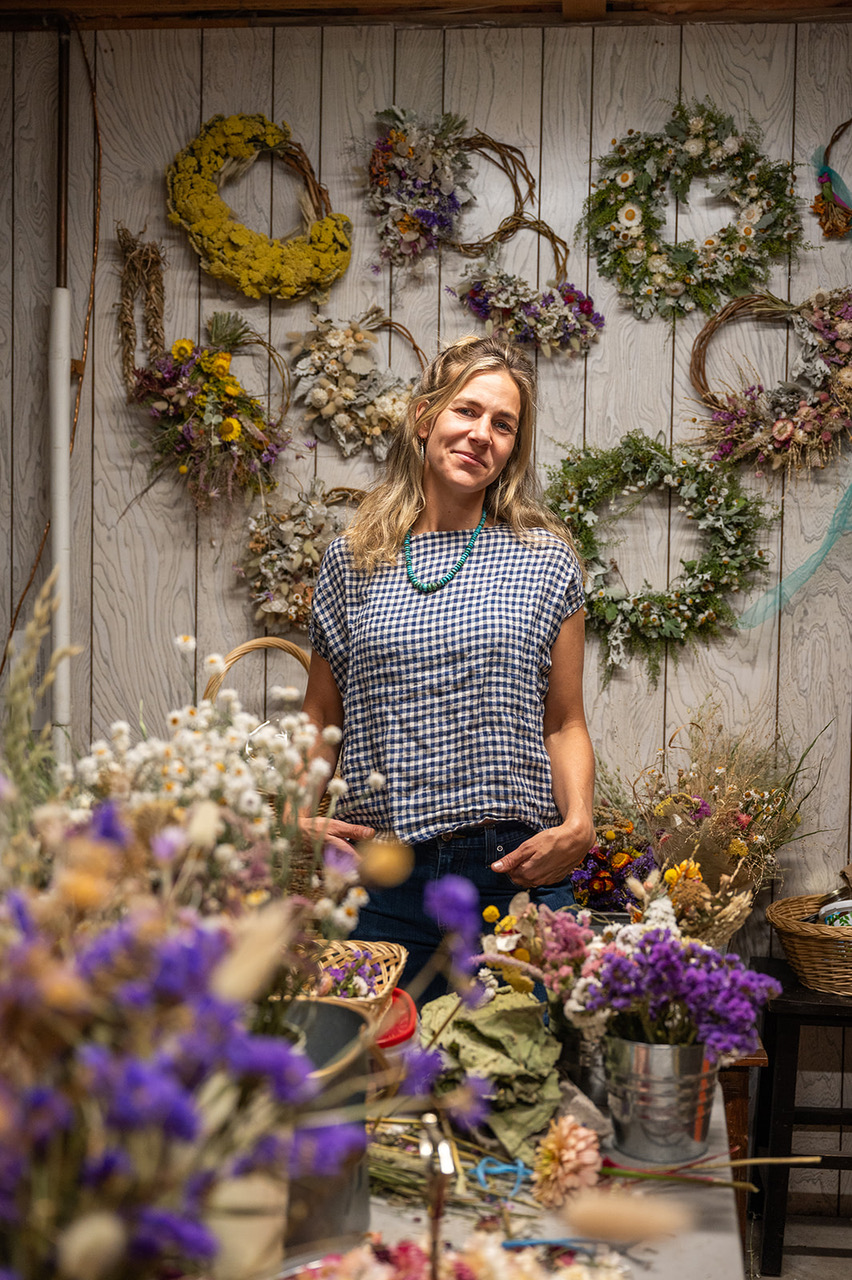
My name is Renee Stewart (she/her) and I farm with my husband Chris Stewart. We are the founders of Stewberry Farm. I am currently participating in the business mentorship network program and my mentors are Nikki Wart and Chris of Lady Hat Farm in Cartor, Northern Alberta.

Where do you farm?
We farm in Summerland, British Columbia, on the traditional, unceded territory of the Syilx Okanagan Nation. We are grateful to live and farm on this land and recognize the ongoing stewardship of the Syilx/Okanagan people.

Business Structure
Stewberry Farm operates as a sole proprietorship.

Land Base & Production
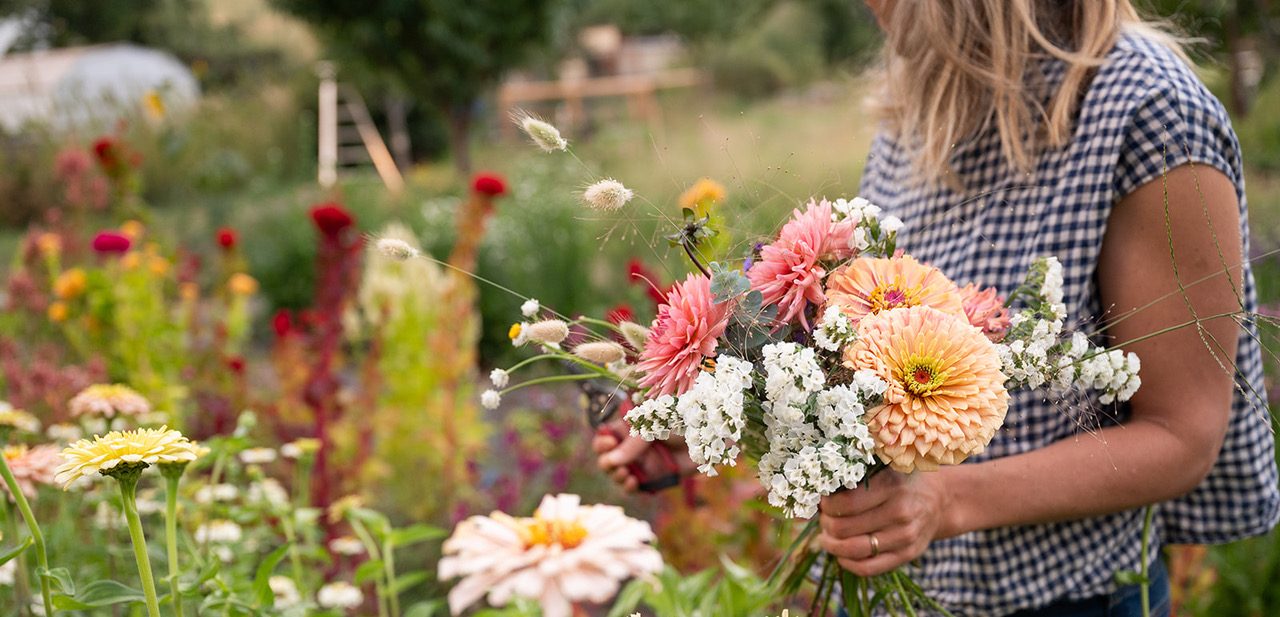
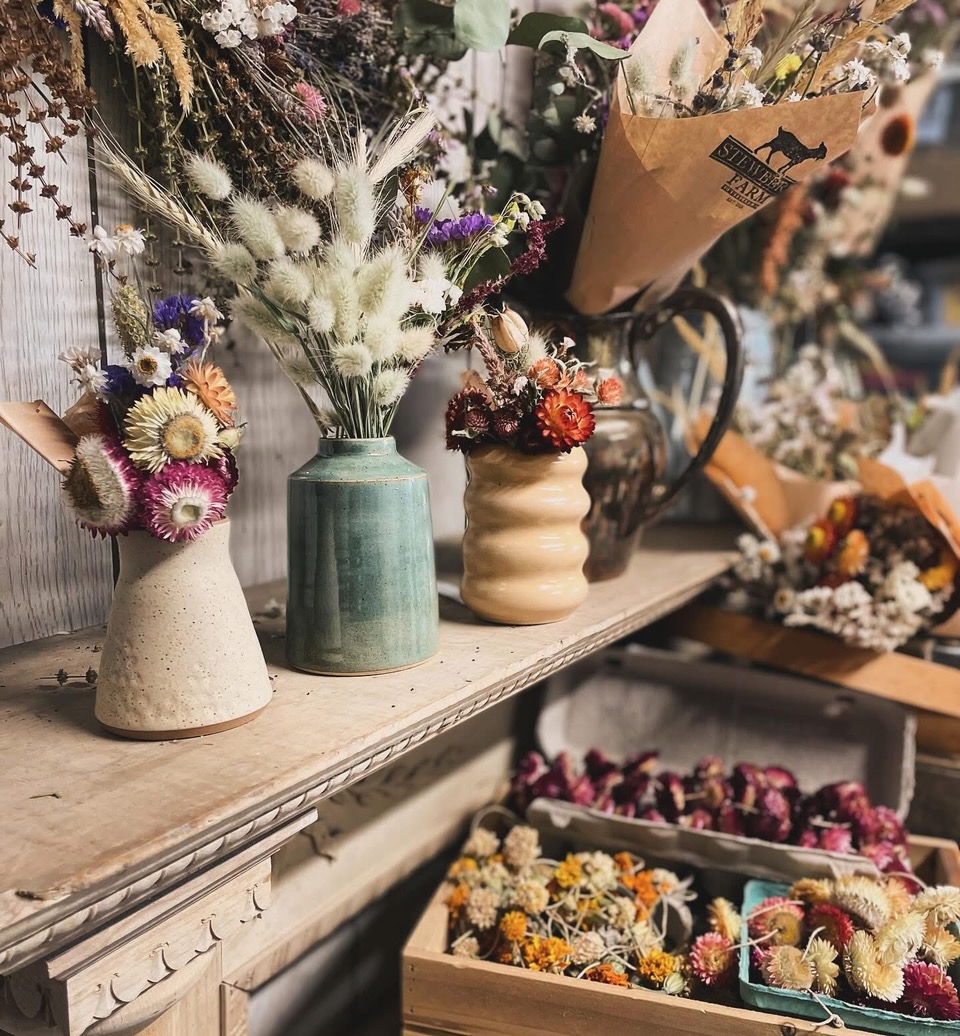
We farm on approximately 2 acres under production (with additional space in development). Our focus is on resilience, biodiversity and generational poly cultural practices. We have found our niche in specialty dried flowers & also offer fresh flower subscriptions, and a very unique CSA for the summer months. Our full crop and farm craft list includes:

  • Asparagus (Spring)
  • Peonies and wildflower bouquets (early Summer)
  • Garlic (mid-Summer)
  • Fresh flowers (mid-late Summer) 
  • Dried flowers, floracraft /workshops in  everlasting & evergreen wreaths (Fall /Winter) 

Land Agreement

One thing we feel incredibly fortunate about is that we own arable land with incredibly healthy soil. Our property offers two flat and farmable acres with an artisanal creek running through it, which makes growing possible to dry farm some crops in drought conditions. We hope to continue using the farm to share alternative farming practices with our community through private u-pick events, workshops, and gatherings, selling at our local farmers market as well as donating extra food to the food bank. As our primary life investment, we came to buy our property in 2016, before market pricing when sky high. 

Financing Story
Stewberry Farm was started through a combination of personal savings and reinvested farm income. We have grown slowly and intentionally, building infrastructure over time rather than taking on significant debt. After 9 years, we finally received farm status. With the help of the Young Agrarian BMN course we are gaining the knowledge of how to proceed with our farm business operations and strategize the best way to proceed with this new status. We have lots of goals for the future including applying for EFP and are looking into grant money opportunities to help fund the future of the farm.  

What Inspired You?
What originally inspired me to start farming was a simple goal my husband and I shared: we wanted to build a homestead — a place where we could grow enough food to increase our resilience, in food, water and energy, and a level of self-sufficiency for our family. Anything extra we hoped to share with our community.

I have become inspired by a deep desire to create beauty, connection, and seasonal rituals through sustainable farming of flowers and specialized crops. I believe flowers can be healing and grounding. My younger self would be very proud but not the least bit surprised that I chose a creative, land-based life rooted in community and resilience. The fact is, I manifested my life in Canada and luckily my hubby was along for the ride as we invested in our future on a small farmable piece of land. 

Over the past ten years living here, our farm has evolved quite a bit. We originally focused on production peppers, but over time the farm shifted toward flowers, along with some perennial crops. As a first-generation farmer, the learning curve has been steep. Starting a farm later in life also has its challenges — learning the physical cost of farming after forty can be tough, and where we live casual farm labor is scarce. That means we’ve had to learn how to do almost everything ourselves.

How Did You Learn to Farm?
Through hands-on experience, mentorship, research, trial and error, and learning directly from other growers. Farming has been both practical education and personal transformation.

My introduction to food, farming and permaculture began when I was sixteen during an internship at the Permaculture Institute of Northern California. That experience opened my eyes to ideas like natural plasters building with cob/ straw bale and adobe construction, community resilience, and the concept of stacking functions — designing systems where everything serves multiple purposes.

I attended college in Humboldt County, California, where I studied Studio Art, Liberal Studies and Appropriate Technology. I worked as a tour guide at the Campus Center for Appropriate Technology at Humboldt State University (now Cal Poly Humboldt). There I helped teach visitors about practical sustainability solutions people could use in their homes. I also learned about farming as I helped run a student-led educational farm with a CSA program. My love for natural building led me to Parra De La fuente Mexico to learn about engineering appropriate technology, build with Adobe and later to Cuba on a trip that would end up changing the entire course of my life.

After college, I moved to San Francisco and worked in construction management. While I learned a lot about project planning ,managing complex systems and green building through the LEED program, I eventually realized I wanted to reconnect with the hands-on work that first inspired me. Given the opportunity to do volunteer work in Cuba, I quit my job and traveled south to help with a natural building project. On the way back through Nicaragua, I met my future Canadian husband on the stairs of a bar. Neither of us knew at the time that a chance meeting like that would eventually lead to building a life — and a farm — together.

Moving from Northern California to Canada meant many major adjustments — especially the climate. I went from gardening in Zone 9 to learning how to grow in Zone 5, which required rethinking almost everything I knew about plants and seasons.

In truth, about 90% of what we’ve learned on this farm has been learned on the fly, taking each project one step at a time. I’m also mostly self-taught in floral design, although years of formal art courses probably helped shape how I see color, texture, and form in flowers.

Ecological Practices & Climate Response
Here on the farm we prioritize:

  • Cold-hardy perennial systems (Zone 5 focus)
  • Drying and preserving flowers to reduce waste
  • Season extension where possible
  • Spray-free and minimal chemical inputs
  • Food Forest (6 active layers)
  • Lane Cropping / Agroforestry
  • Riparian Planting
  • Organic Soil Amendment and compost building
  • Fruit Tree Guilds
  • Hügelkultur
  • Dry Farming / Water Management
  • Drought/Pest/Disease Hardy
  • Polyculture & Crop Rotation
  • Conservation Tillage
  • Cover Cropping
  • Agrobiodiversity

We are designing our farm to be adaptable to climate variability and increasingly unpredictable weather patterns. Being in the Okanagan due to fires, flooding, crazy rivers flooding and closing major highways we have seen what happens when our food systems are compromised. While we have shifted our focus on flowers, we still have a small market garden for subsistence. 

Why Business Mentorship? Primary Goals This Season

I was fortunate to be paired with an incredible husband-and-wife flower farming team from Northern Alberta called Lady Hat Farm. With Nikki and Chris’s experience, knowledge and encouragement they are  helping me refine my vision and build confidence in growing fresh flowers. Originally, in 2023 I started following Nikki and imitating growing the flower types that dried well which she was growing in zone 3. Similar to art school, you have to imitate the great masters to get better, so that in part where my journey and  love for dried flowers started  I have very much been drawn to Nikki’s knowledge of the dried flower arts, but with her tutelage in 2026; I am challenging myself to fall in love with fresh flowers this season. 

I applied for this mentorship to learn the business side of farming,  build stronger systems, improve profitability, and clarify our brand direction. My primary goals this season are:

  • Strengthening CSA and subscription structures
  • Improving marketing consistency
  • Increasing workshop revenue
  • Creating clear production and financial systems
  • Building confidence in pricing and scaling decisions

Greatest Challenge as a New Farmer

Farming is one of life’s greatest rewards but has presented some of my life’s greatest challenges. As first generation farmers (over 40) we’ve had to figure out many things from scratch — where to store / process food, how to access markets, how to price and sell products, and ultimately where the farm’s profit is actually coming from. Building those systems, while also trying to generate consistent revenue has been a significant hurdle without the passed down knowledge of systems that more established farming families often inherit through generations.

Farming over 40 – Beginning a physically demanding profession over the age of forty means navigating the physical realities of the work while still building a new business. It requires resilience, creativity, and learning how to work smarter with systems and planning so the farm can be sustainable both financially and physically.

Starting a farm while raising a family –  I would also add that starting a family while building a farm has been largely rewarding, but also very difficult and challenging. The more that you have established the better off that you are even buying somebody’s business that’s established and having their records is a smart idea. While we hope to raise children with farmer ‘work ethic’, slowing down the process to teach/include them in their early years has taken a toll on productivity.

Learning how to slow down – In permaculture, one of the core principles is to observe the land for at least a year before making big decisions — watching how water moves, where the wind travels, and how sunlight changes through the seasons. We were given the opportunity early on to plant a lot of fruit trees. Looking back, I might not have placed them where they are today — but they were close to water, which made irrigation easy. Now, nine and a half years later, those trees are established and yielding fruit.

Self Doubt – Doom Scrolling and Social media makes it easy to compare your farm to someone else’s highlight reel. Farming happens in real life — during pandemics, while raising children, while grieving losses, and while building a life at the same time.

My advice in our short time of farming experience is to Celebrate the small milestones – I’ve learned it’s important to step back and look at what you’ve accomplished within your own circumstances – recognize how far you’ve come. And most importantly — stop measuring yourself against someone else’s journey. It’s your adventure and only the 10 year old version of yourself, and 80 year old future you should be allowed to be your critics.

Business Tools & Resources

Flower Farming Resources 

  • For Flower Growing specifically Nikki Wart and Chris of Lady Hat Farm in Cartor, Northern Alberta.
  • Lisa Mason Ziegler is someone else I started following on Instagram. Her books Cool Flowers and The Cut Flower Handbook are great references for cut flower growers.
  • Erin Benzakein’s Floret Farm’s Cut Flower Garden is another great resource.

Permaculture Resources 

  • Bill Mollison’s Permaculture: A Designer’s Manual has been on my bookshelf for years.
  • Toby Hemenway’s Gaia’s Garden: A Guide to Home-Scale Permaculture is a wonderful guide to small-scale permaculture.
  • Ben Falk’s The Resilient Farm and Homestead explores innovative permaculture and whole-system design approaches.

Farming Resources

  • Eliot Coleman’s The New Organic Grower for organic market-garden practices – was my text book in college and I still reference it often to this day.
  • And for grazing systems, Joel Salatin is well known for his work on rotational grazing and regenerative livestock management.
  • Beverley Gray’s The Boreal Herbal: Wild Food and Medicine Plants of the North has been an amazing reference especially for British Columbia.

How to Find Us

Website: www.stewberryfarm.com

Instagram: @stewberryfarm

Facebook: Stewberry Farm


Feeling inspired and ready to dig into your business with a mentor? Mentee applications open in October 2026. Mentor applications are open year-round. Click below for more information!