
British Columbia Business Business Mentorship Network Canada Farmer Profiles Flower Province / Territory West Coast - Islands
Business Mentorship Network – Full Moon Farm
Posted on May 21, 2026

 Filter by Popular Categories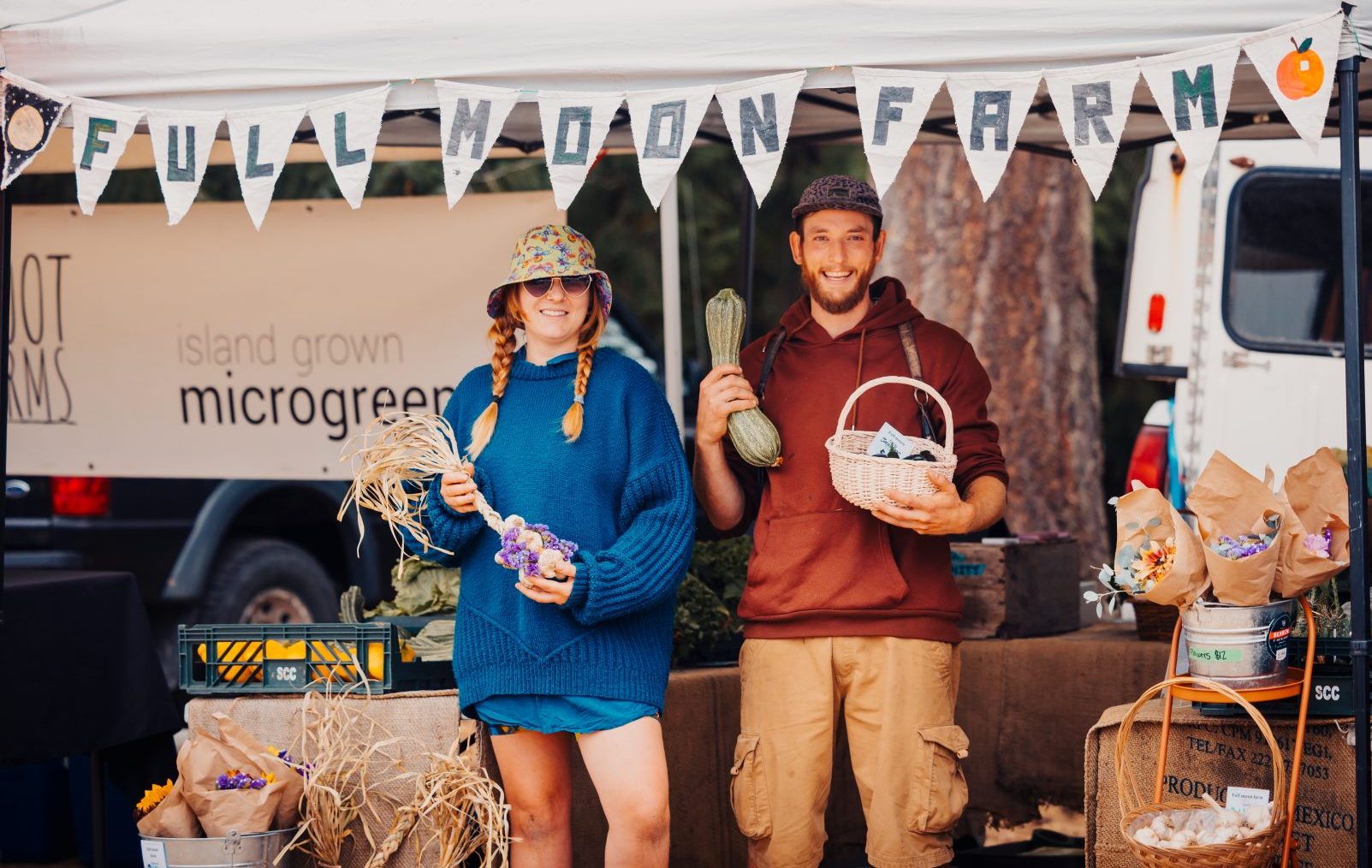
Posted on May 21, 2026
“During the pandemic in 2020 we really began to reevaluate our lives and the kind of life we wanted to live. We got a few ducks and planted a backyard garden. After a few years of growing our own food, we were hooked.“
Young Agrarians is celebrating the twelfth year of the Business Mentorship Network (BMN) program in BC and the fourth year of the BMN in the Prairies! The BMN offers a year-long farm business mentorship to a diverse array of new and young farmers. Through one-on-one mentorship, peer networks, and online workshops, new farmers develop the skills necessary to operate ecologically sustainable and financially viable farm businesses.
Applications for mentees open in October 2026. Click below to be notified when applications open!
Mentor applications are accepted year-round. Check out the Business Mentorship Network page for more information!
Meet a mentee from the current cohort and learn about their farm and why they joined the Business Mentorship Network. Want more? Head over to our BMN Blog for more mentorship stories.
We are Kayla (she/her) and Drew (He/Him) and we operate Full Moon Farm, a 5-acre farm located on Gabriola Island on the ancestral lands of the Snuneymuxw First Nation Peoples. Our Mentors are Storii and Dane from Wild Folk Herb Farm located on Salt Spring Island on the traditional lands of the Coast Salish Peoples. Full Moon Farm operates as a general partnership between Kayla and Drew.
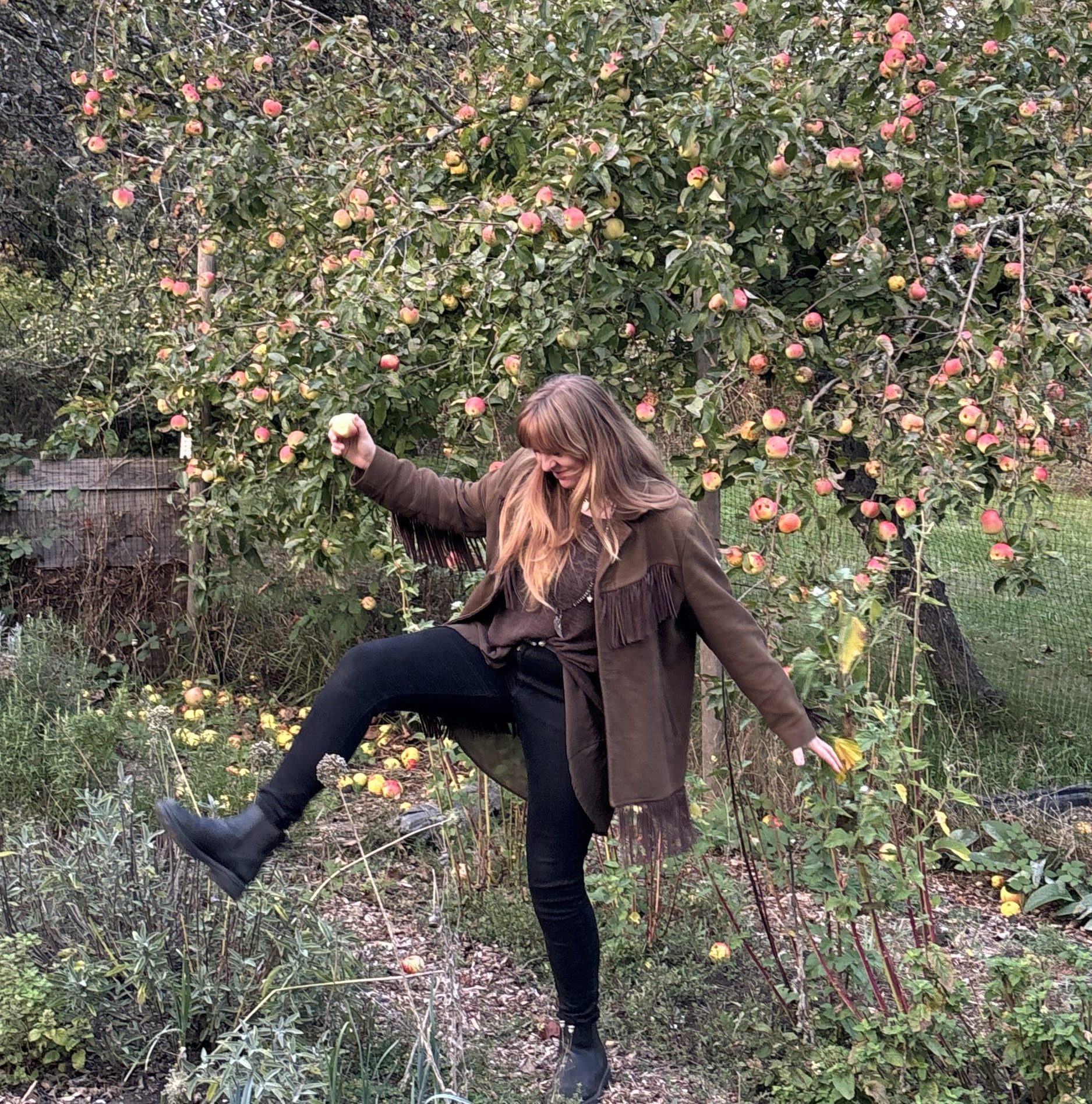
Full Moon Farm includes a small orchard with about 15 apple trees, 5 plum trees, 5 pear trees, and a few cherry trees, with plans to gradually add more fruit and nut trees over time. We also have about 3 acres of hay, which we bale and sell to local livestock owners, while also using some for our chickens and as mulch on the farm as we need.
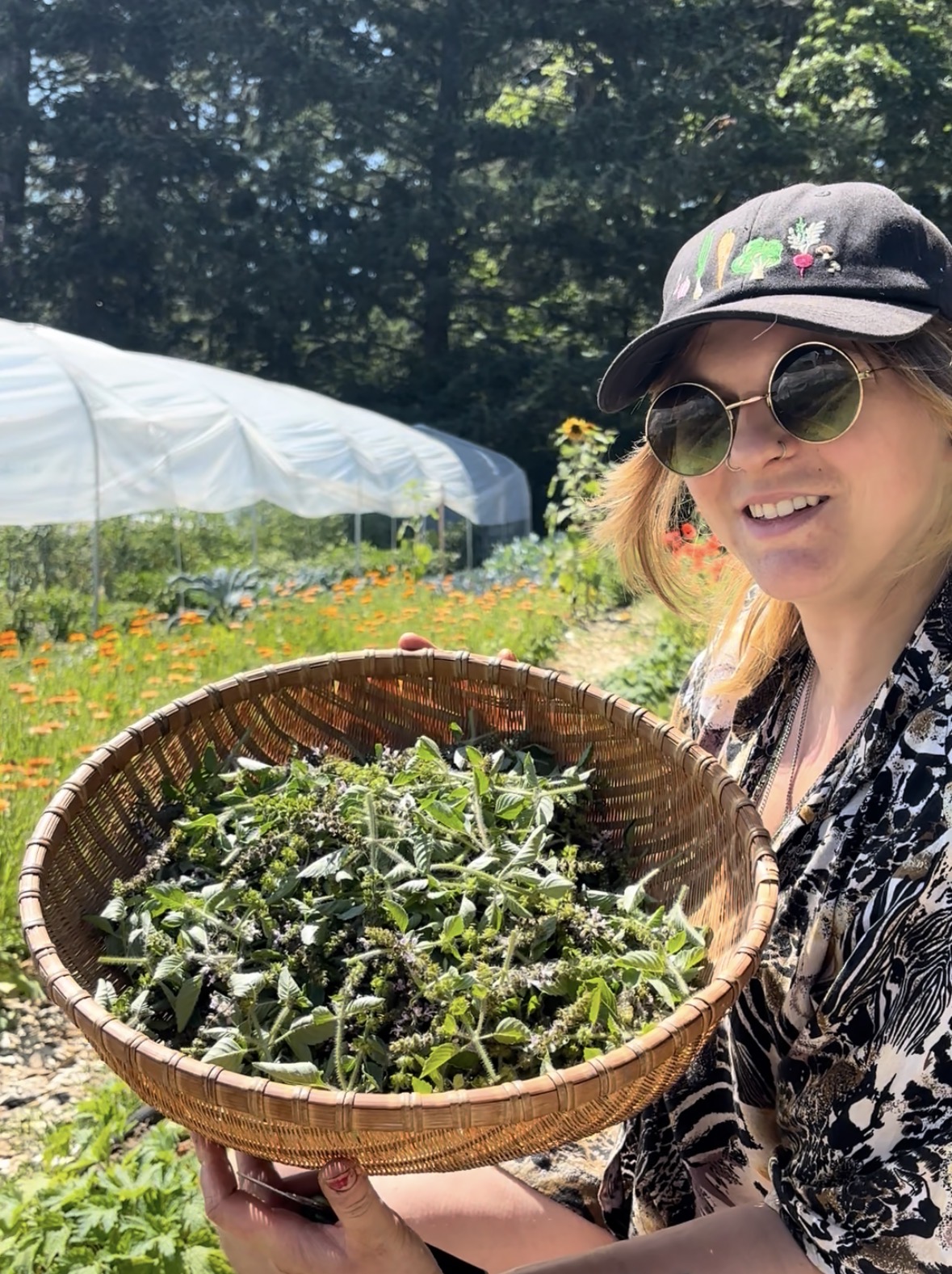
Our main area of production is a ¼-acre market garden, where we grow twenty varieties of medicinal herbs in fourteen 120-foot beds. Most of these herbs are hand-harvested, dried in our solar drying shed, and blended into handcrafted herbal teas. We also have a 100-foot hoop house where we grow hot and sweet peppers, tomatoes, and ashwagandha.
What kind of land agreement do you have ?
We farm on land that was once Kayla’s grandparents’ farm. Kayla’s mom now owns the property, and we lease the land with a written agreement. Our hope is to continue farming here long-term and eventually build our own home on the property so we can live and farm here for many years to come.
Did you access any financing to buy land or start your farm business?
We feel incredibly grateful to have access to land and didn’t need to take on debt to purchase property in order to start farming. Being able to farm on family land has made it possible for us to slowly build the farm using our own savings and by reinvesting what we earn back into the business. If we ever do need financial support in the future, Gabriola has a wonderful Investment Co-op that supports small businesses and farms on the island by offering community-based loans.
What inspired you to get into farming?
We did also know that Full Moon Farm needed stewards after Kayla’s grandparents had passed away and we knew there was opportunity to move to the island and it did inspire us to take the plunge to continue to learn about agriculture.
During the pandemic in 2020 we really began to reevaluate our lives and the kind of life we wanted to live. We got a few ducks and planted a backyard garden. After a few years of growing our own food, we were hooked. Through that process we realized how disconnected we were from the land and our food. We both felt a deep calling to live a life in reciprocity with the land.
Just before the pandemic Kayla’s grandfather passed away and Full Moon Farm needed stewards. Knowing there was an opportunity to move to Gabriola and care for the land felt like the nudge we needed. It inspired us to take the leap and begin learning how to farm, one step at a time.
How did you learn how to farm?
Kayla attended the KPU Farm School, where she spent seven months learning about regenerative agriculture. She also took several courses through KPU’s Sustainable Agriculture program. It was during that time that Kayla really fell in love with growing food, food security, and understanding the environmental impacts of modern-day monoculture farming. Drew, on the other hand, is largely self-taught. He’s learned a lot through what we call the “University of YouTube,” as well as online forums, books. Drew is also a skilled tradesperson, and he brings a lot of that knowledge to the farm whether it’s figuring out irrigation systems or building infrastructure. We’re both still learning every year and definitely make our share of mistakes. In many ways, we’re simply doing it, trying our best, and learning through trial and error as we go. We remember to stay curious and try new farming methods every year.
What types of ecological farm practices and/or responses to climate change realities do you engage in?
We farm using no-spray practices and don’t use any synthetic fertilizers. Instead, we try to follow regenerative farming principles and focus on building healthy soil over time. We mulch our pathways with alder chips and use straw in the beds to increase organic matter and help retain moisture in the soil. We also use cover crops oats being our favourite as we can also harvest the Milky Oats. For annuals we make sure to rotate our crops. We’re still learning a lot about how to build healthy soil, but our goal is to farm in a way that works with the ecosystem rather than against it. Creating space for pollinators and beneficial insects is really important to us, and we try to grow a diversity of plants that support them.
Part of the reason we chose to focus on growing medicinal herbs is that many of them are naturally resilient and require less water, which feels like an important consideration as our climate becomes hotter and drier.
Why did you apply for business mentorship?
We applied for the mentorship program because 2026 will be our third year of production. Over the past couple of years we’ve made a lot of mistakes, but we also feel like we’re finally getting clearer on the direction we want the farm to go in focusing on medicinal herbs, perennial fruit, and peppers. Farming can be an incredibly rewarding lifestyle and career, but it also comes with a lot of uncertainty, hard decisions, and potential burnout. We felt that we needed experienced farmers and mentors to talk through ideas and decisions.
One of our biggest goals for this season is learning how to grow the farm in a way that is sustainable not just for the land, but also for us as people. We want to keep farming and reduce the burn out we have felt the last two years. Within that goal we hope to diversify sales avenues and do less markets to hopefully have 1-2 days off a week during the growing season.
What is the greatest challenge you face as a new farmer?
Burnout is probably our greatest challenge as new farmers. Both of us still work off-farm jobs while running Full Moon Farm, which can make the workload feel pretty intense at times. Our hope is that as the farm becomes more established, we’ll eventually be able to step back from some of that off-farm work and focus more of our energy on the farm itself. When we started, we had almost no infrastructure and only a few basic tools. Each year we’re slowly investing in what the farm needs, things like irrigation, drying space, and equipment. We’re also still learning how to dial in our systems and find our flow with farming. Every season we’re experimenting, adjusting, and figuring out what works best for us. It can be challenging, but it’s also really rewarding when a new system actually works.
What business tools or resources could you not live without?
We love our farming books and rely on them a lot. One of our number one resources has been The Organic Medicinal Herb Farmer by Jeff Carpenter and Melanie Carpenter. It’s been an incredibly valuable guide for growing and processing herbs. Another book that really influenced us is The Market Gardener by Jean-Martin Fortier. It helped shape how we think about small-scale farming and efficient production systems. We also found Farming with a Future by Rebecca Thistlethwaite to be a great resource, especially for the business side of farming. We also spend a lot of time learning online. Michael Pilarski’s talks and videos on YouTube have been a great resource, especially when it comes to growing and harvesting medicinal herbs.
How can we find out more about you, your farm, and its products?
You can follow us on Instagram @fullmoonfarmandstudio
Full Moon Farm and Studio
Located on the ancestral lands of the Snuneymuxw First Nation
Gabriola Island, BC