
Berries British Columbia Business Business Mentorship Network Canada Farmer Profiles Flower Greenhouse Kootenay Boundary Poultry - Layers Tree Fruit Vegetable
Business Mentorship Network – Dreamcatcher Farm Harrop
Posted on March 20, 2026

 Filter by Popular Categories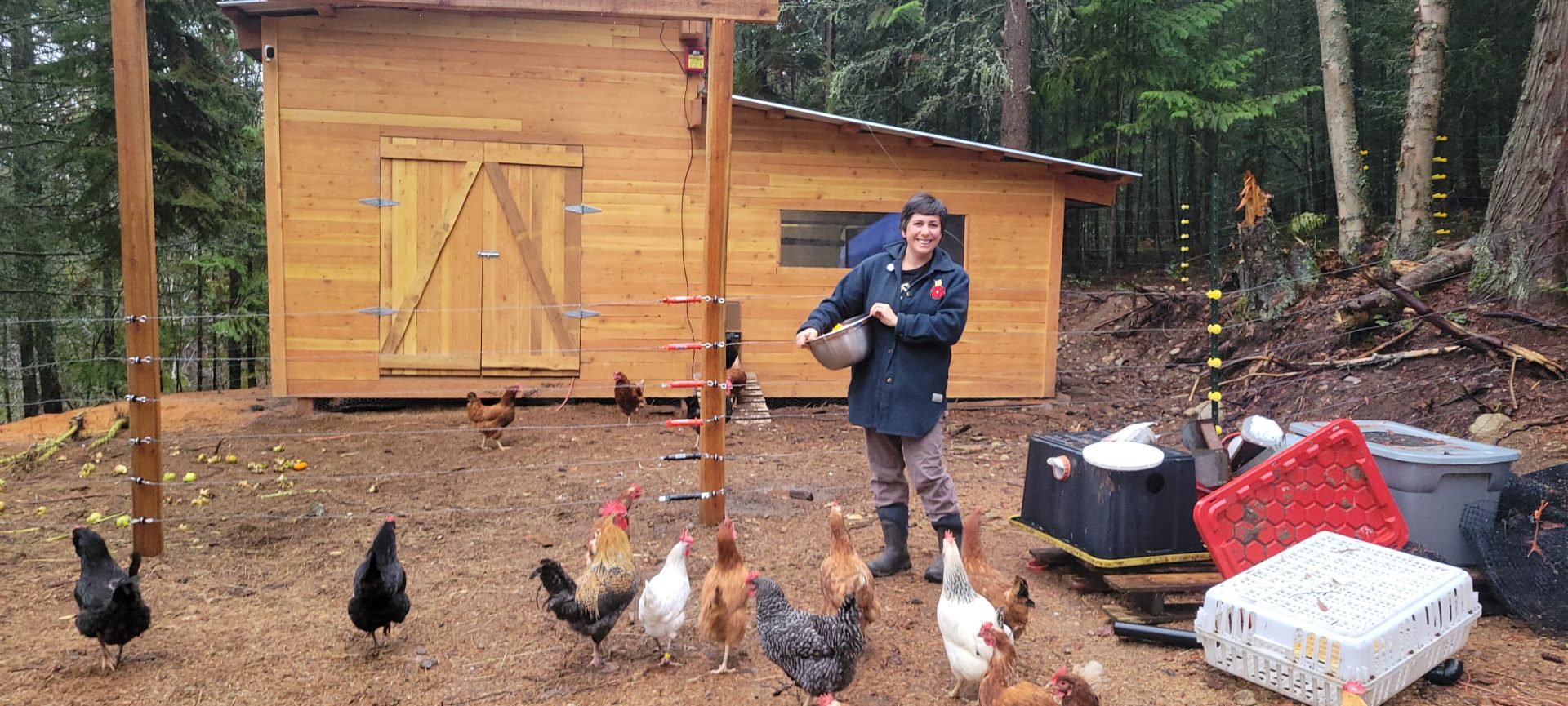
Posted on March 20, 2026
“We applied for the business mentorship because we knew that we had made it past the initial period of blood, sweat, and tears that either make or break people. We knew that we were now in a position where we could be poised for major growth and we knew that we didn’t really know enough. Our books were a mess and we needed help! This year our primary goal is for the farm to break even or maybe break a profit. That is a challenge with tractor payments!“
Young Agrarians is celebrating the twelfth year of the Business Mentorship Network (BMN) program in BC and the fourth year of the BMN in the Prairies! The BMN offers a year-long farm business mentorship to a diverse array of new and young farmers. Through one-on-one mentorship, peer networks, and online workshops, new farmers develop the skills necessary to operate ecologically sustainable and financially viable farm businesses.
Applications for mentees across Canada open in Fall 2026. Click below to be notified when applications open!
Mentor applications are accepted year-round. Check out the Business Mentorship Network page for more information!
Meet a mentee from the current cohort and learn about their farm and why they joined the Business Mentorship Network. Want more? Head over to our BMN Blog for more mentorship stories.
Welcome to Dreamcatcher Farm Harrop in the beautiful Central Kootenay region, just 30 minutes east of Nelson, B.C. Dreamcatcher Farm Harrop is owned and operated by Naomi Legg (she/her), of Métis ancestry and Andre Joniec (he/him), a first generation Canadian who hails from Poland. Our mentor farm is Bent Plow Farm in Blewett, BC and the amazing folks who run it, Emma and Scott!
We would like to acknowledge that we live, work and play on the traditional, ancestral and unceded territory of Sn̓ʕaýckstx (Sinixt), and Ktunaxa Peoples. We make this acknowledgment to show our respect for the təmxʷulaʔxʷ (homeland)/ ʔamakʔis (territory) and the Sn̓ʕaýckstx and Ktunaxa Nations. We feel so privileged to be connected to this place and look forward to working in community with these nations and our local West Kootenay Metis Society in Indigenous food sovereignty matters.
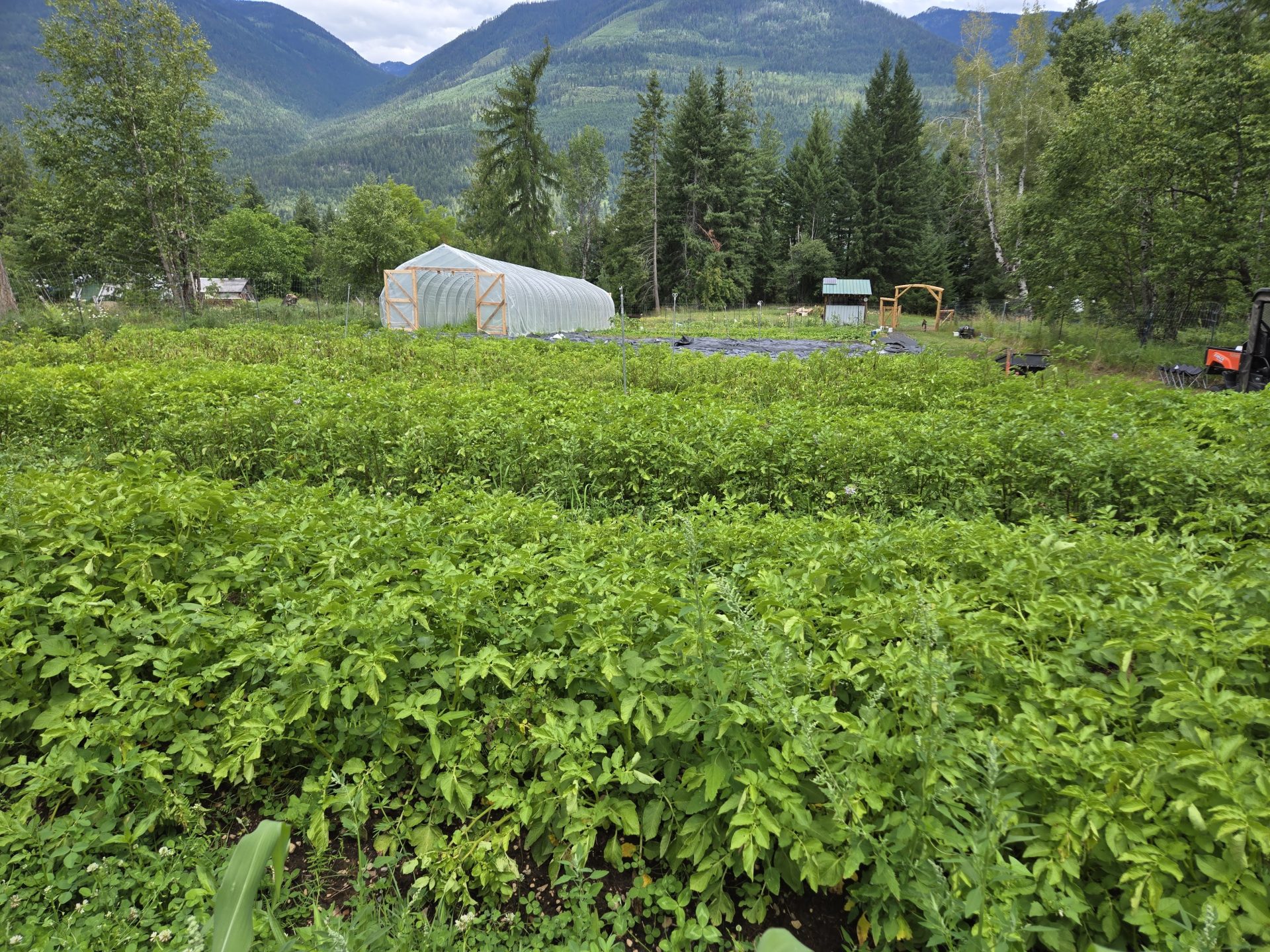
Currently we are a partnership farm and are looking to explore the non-profit route in order to support our work with the local nations and Métis chapter. We have 50 acres of land, most of which is forested and we have about 3 cleared acres. We have a small food forest (¼ acre) and a large mixed vegetable garden (¾ acre) as well as forest foraging opportunities for huckleberries and saskatoons. We are also beginning to grow Indigenous medicines like tobacco, sweetgrass, and sage as well for ceremonial use. We will be hosting on-farm conversations with our local Indigenous community to see what kinds of foods they would like us to grow to promote Indigenous food sovereignty.
We do not come from families of farmers, in fact, we grew up in Edmonton, Alberta. I (Naomi) took a permaculture certificate in 2013 and from then on I knew I wanted to garden hard. The yards in Edmonton were small and I really developed this dream to farm, so after we had lived my husband’s dream to sail as a family for a year, he said I should look into pursuing my dream of farming. That summer I hired realtors all across the province of BC. We couldn’t afford most offerings on Vancouver Island or Okanagan region so we had to look into the less farmable regions of BC. We landed here in the Kootenays and I think we found the sweet spot! Farming in the Columbia basin has some extra grant opportunities. We used our life savings and put a 20% down payment on a house in the Agricultural Land Reserve, not yet listed as a farm. Our mortgage went up but our view sure has improved! We were also really lucky to have some savings from our government jobs in Edmonton, and we purchased a tractor and a side-by-side as well as essential hand tools like the Jang Seeder and a wheel-hoe in the first two years. Without these tools, the land would have beat us into submission. We are on the side of a rocky and sandy mountain.
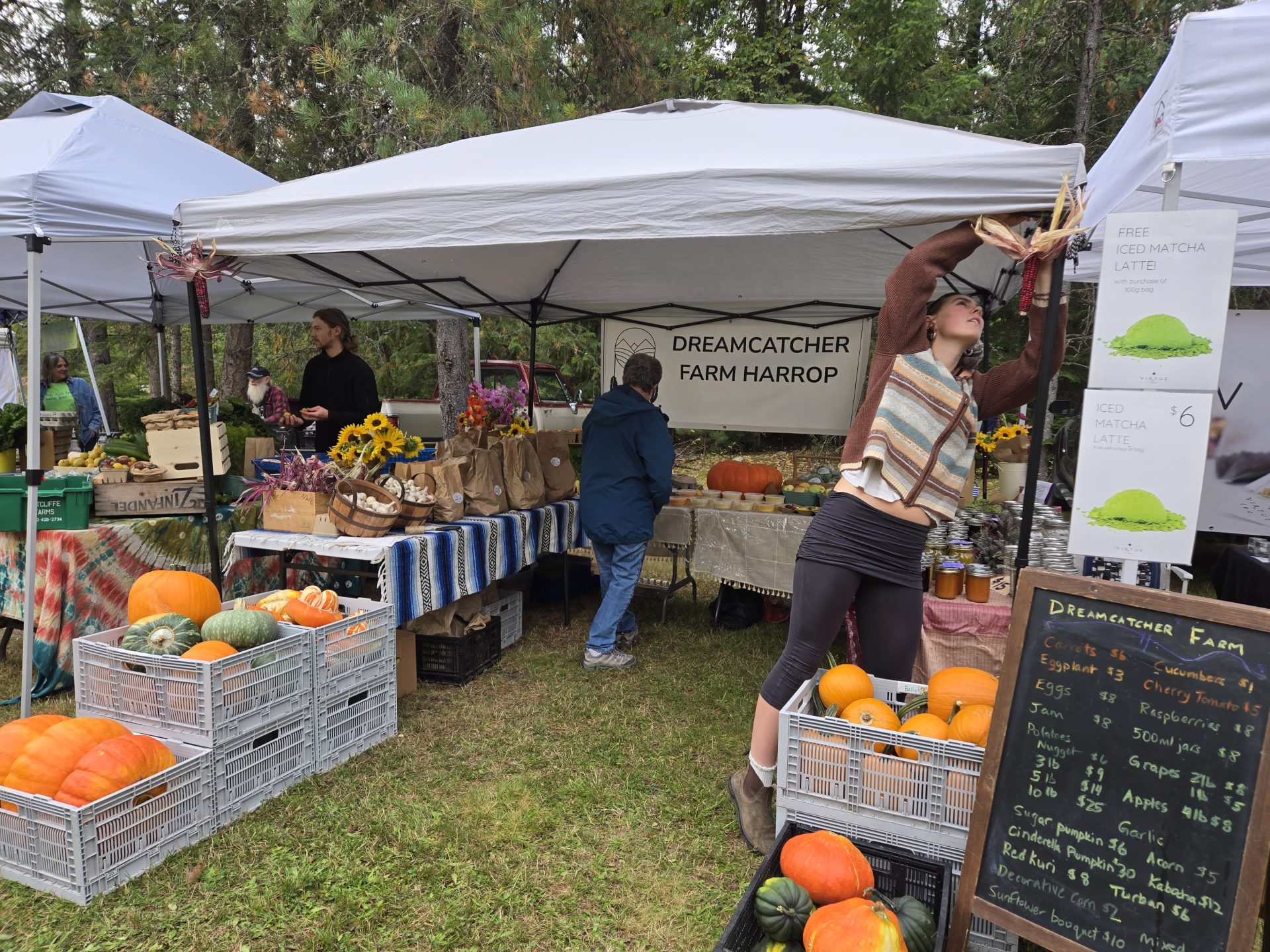
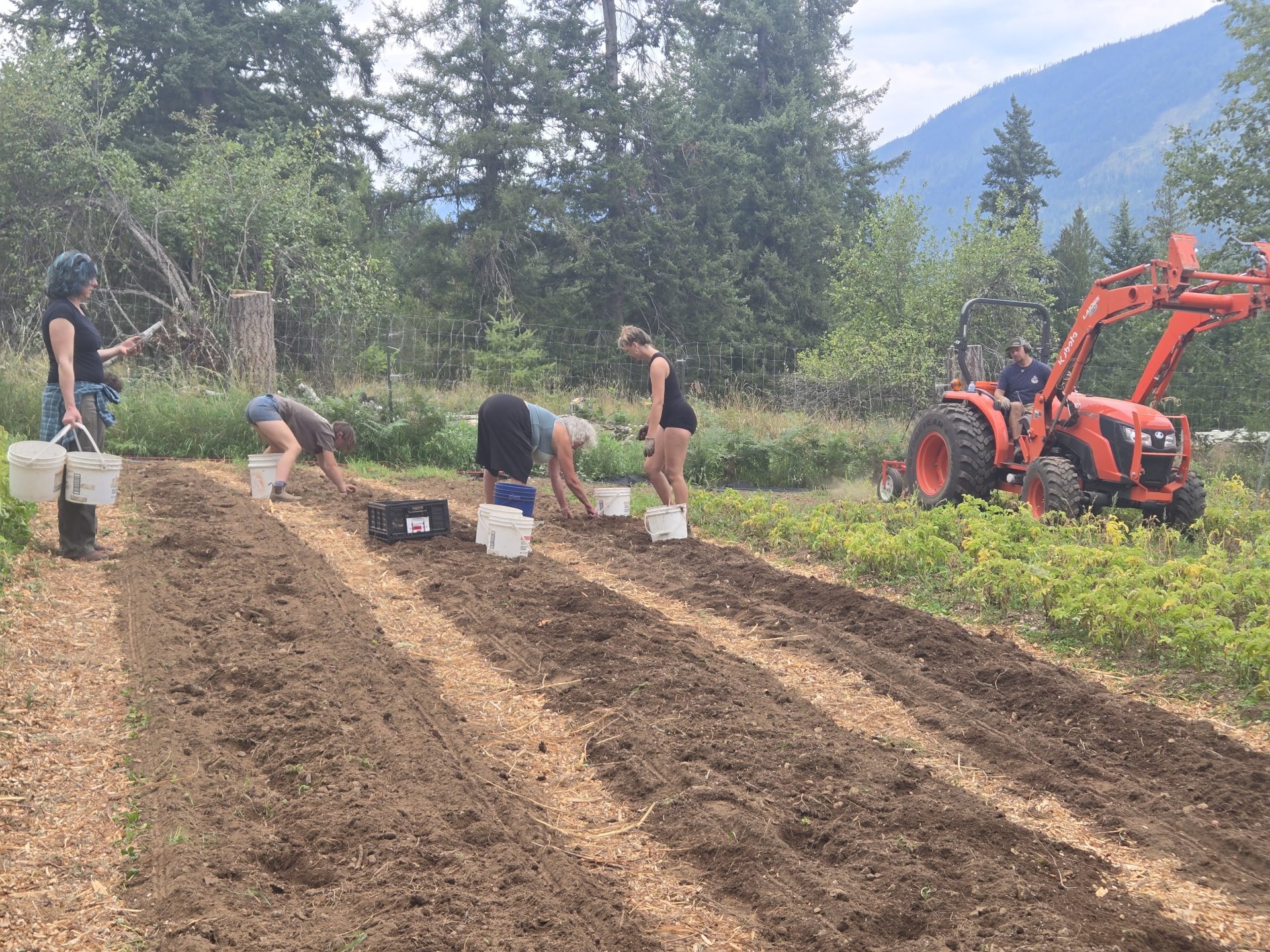
The first season, we had a small bench, really only two 50 foot beds while we terraced and expanded the fruit garden. The second season, we tilled a bunch of land and threw up a fence and dug rocks until we joked that we should have called the place Rock Farm. Last season we gained farm status and sold $16 000 worth of farm goods. Most of the rock has been removed. This season, all of our beds will be under production and we plan to move the squash into hugelkultur piles and free up those rows for flowers. In the beginning, I signed up for Small-Farm University offered online by Michael Kilpatrick and each season I purchased as many books as I could afford on the topic. Now, there is so much offered on youTube.
As a permaculture farm, we engage in many holistic practices. We are a low-till or no-till farm and we use forest mulch wherever possible. We are trying to transition away from plastic landscape fabric to felted covers for covering rows. We try to maximize water usage on the farm and water only in the cool parts of the day as well as have our rows oriented on the slope to retain the most water. In the future, we are looking to create a pond system for the capture and storage of snowmelt. We also plant pollinator friendly flowers and encourage the insects to help us manage pests. Last year we had a resident toad and snake and hope more will be welcomed into the space to manage mice and voles. We are forever cleaning up the forest that surrounds the farm for fire mitigation and to create mulch to use in the garden.
We applied for the business mentorship because we knew that we had made it past the initial period of blood, sweat, and tears that either make or break people. We knew that we were now in a position where we could be poised for major growth and we knew that we didn’t really know enough. Our books were a mess and we needed help! This year our primary goal is for the farm to break even or maybe break a profit. That is a challenge with tractor payments! The other major focus is to work with our Indigenous neighbours to find out how we can support local Indigenous food networks, conversations, and grow what the community needs. Some of this work is best done with grants as the funding model so we are deciding what model the farm business will take.
The greatest challenges we face as new farmers is the high cost of land, tools and materials needed to get started. On our farm, the only things we had were an unheated, unpowered quonset and a partially fenced garden with water. We have had to buy the machinery and are now building the infrastructure required to be a profitable farm. Another barrier is the cost of processing either with value-added products in a commercial kitchen, or getting licensed for on-farm slaughter. There are many regulations and expenses which makes entrance into this market difficult. There are grants available but you really have to be in the long game in order to get everything needed for smooth farm operations.
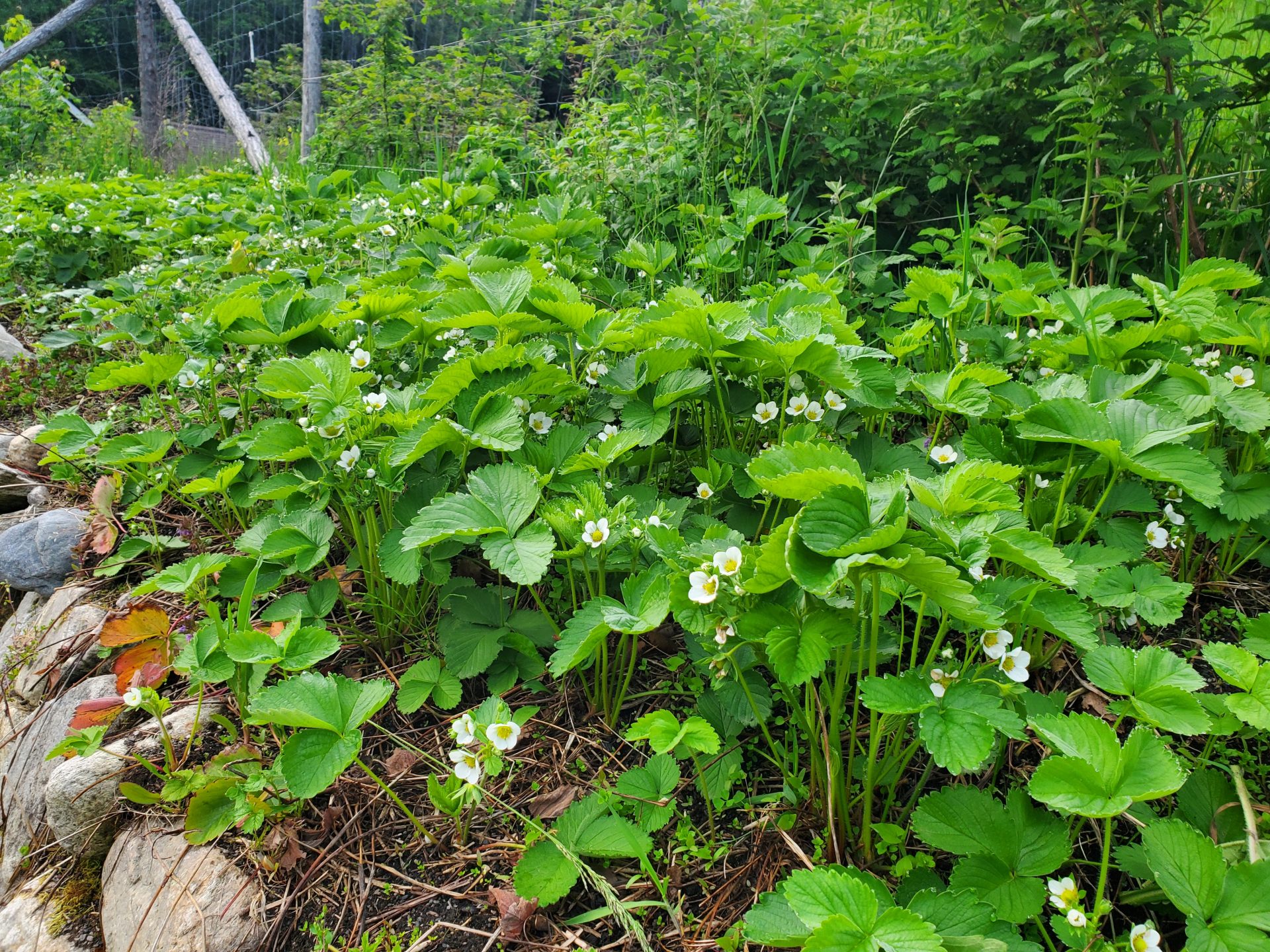
My favourite business tools are Audiobooks about farming (as many as you can find) that I listen to while I farm, John Jevons How to Grow More Vegetables, all books on permaculture, as well as SeedTime for planning the planting schedules and LocalLine for my website and farm store.
We are not heavily on social media because we prefer to stay local and with our hands in the dirt but you can find us on Instagram @dreamcatcherfarmharrop or check out our website at www.dreamcatcherfarmharrop.com. You might also see us featured in the upcoming Kootenay Women in Business Magazine in this, the year of the woman farmer!