
Business Business Mentorship Network Canada Farmer Profiles Livestock - Pigs Ontario Poultry - Broilers Vegetable
Business Mentorship Network – Brilliant Meadows
Posted on March 12, 2026

 Filter by Popular Categories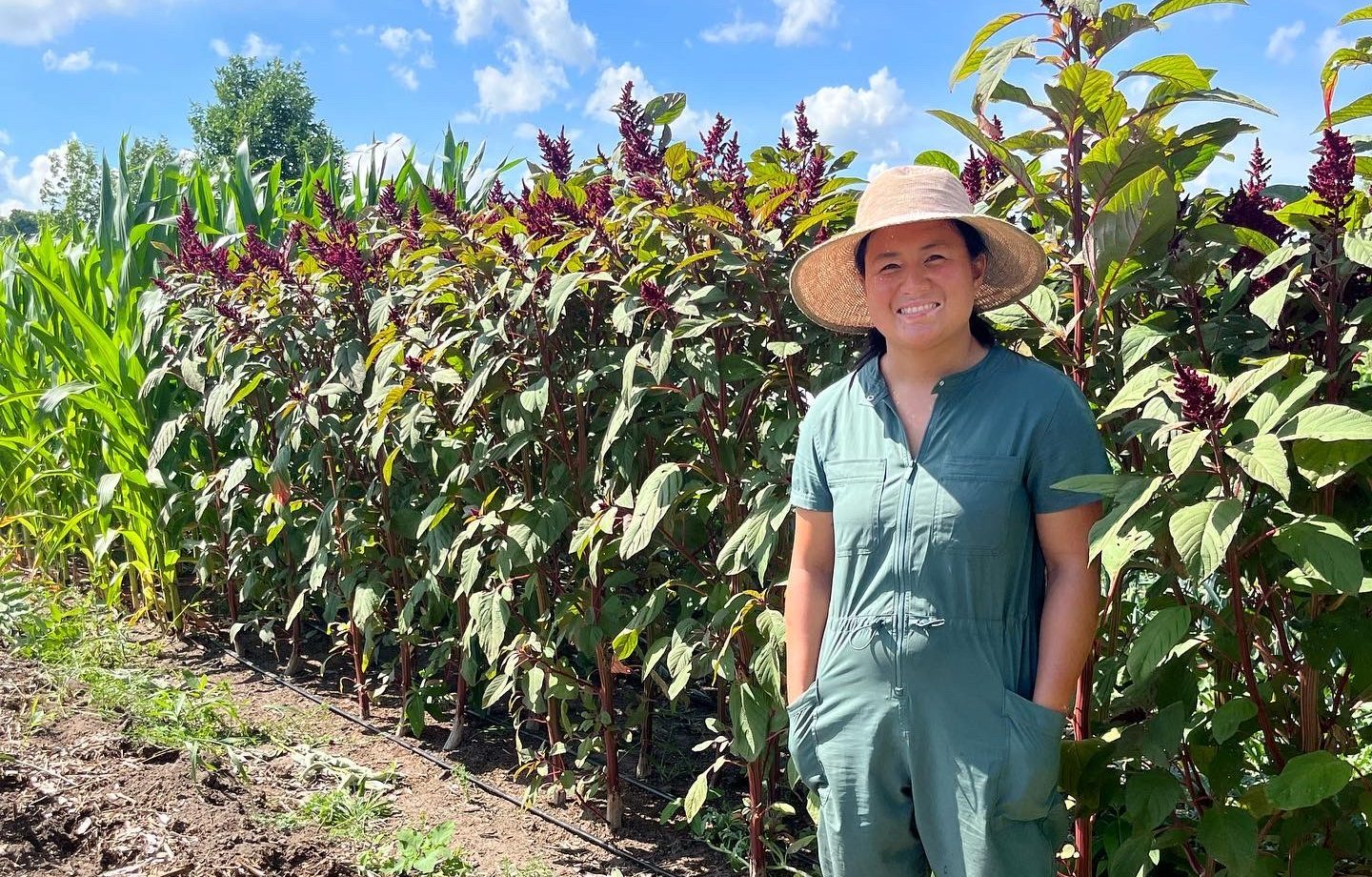
Posted on March 12, 2026
“I applied for a farm apprenticeship my first year after university just as something to try before trying to find a career related to my degree. While there, I fell in love with the work and the lifestyle, and met some very important farm mentors – including another first generation Asian woman that was out there farming on her own. It was the first time that I had seen someone similar to me in a farm setting and I think it changed my mindset about what was possible in the future.”
Young Agrarians is celebrating the twelfth year of the Business Mentorship Network (BMN) program in BC and the fourth year of the BMN in the Prairies! The BMN offers a year-long farm business mentorship to a diverse array of new and young farmers. Through one-on-one mentorship, peer networks, and online workshops, new farmers develop the skills necessary to operate ecologically sustainable and financially viable farm businesses.
Applications for mentees across Canada open in Fall 2026. Click below to be notified when applications open!
Mentor applications are accepted year-round. Check out the Business Mentorship Network page for more information!
Meet a mentee from the current cohort and learn about their farm and why they joined the Business Mentorship Network. Want more? Head over to our BMN Blog for more mentorship stories.
My name is Shiying Lu (she/her) and I run Brilliant Meadows. My mentor is Tim Livingstone and he runs Strawberry Hill Farm with his family in Pembroke, New Brunswick. We were matched because we both run diversified operations that include vegetables and livestock.
I farm on the rolling hills of the Niagara escarpment in Mono, Ontario. The town of Mono is within the traditional territory of the Tionontati (Petun), Attawandaron (Neutral), Haudenosaunee (Six Nations), and Anishinaabe peoples. The land is also part of the Treaty 18: the Nottawasaga Purchase of 1818.
What inspired you to get into farming? Would your younger self be surprised by where you are now?
I was always interested in farming due to my love of food. I think my younger self would be very surprised! Truthfully I had never considered farming an option as a first generation immigrant – I didn’t have access to land or know anything about growing. I applied for a farm apprenticeship my first year after university just as something to try before trying to find a career related to my degree. While there, I fell in love with the work and the lifestyle, and met some very important farm mentors – including another first generation Asian woman that was out there farming on her own. It was the first time that I had seen someone similar to me in a farm setting and I think it changed my mindset about what was possible in the future.
How did you learn how to farm?
My first farm mentor once said that ideally, a beginning farmer should do 3 years of apprenticeship: one year on any farm, and then two years on a farm that is most similar to the type of farm that they would like to run. I think this is very good advice – though I did not do exactly that. I did one year of apprenticing on a biodynamic vegetable CSA farm that was draft horse powered and one year at another CSA farm that also raised sheep. After that, I had the opportunity to run a farm for a year while the owners were on a sabbatical. This farm was most similar to what I wanted to do, and this is where I learned to raise pastured pork and poultry. I took a few years off farming after this last farm to move back closer to my family and I pivoted to arboriculture because it was another job that was outdoors and involved working with plants. I learned a lot of what I call “farm-adjacent skills” at this job like how to efficiently move heavy loads, think logistically about moving materials around and work with lots of tools like chainsaws and skid-steers. Similarly, I became a much more confident tractor operator after a season of snow removal. And although I do not enjoy it, I learned a lot about equipment maintenance and repair that translates well to farming at that job as well.
I also spent a few years, when we had arrived at our farm but I was still working full time, growing Asian vegetables for my personal use. It was great to be able to take a few seasons to try new crops that I had been interested in but not been able to grow within the demands of a CSA. These experiments helped inform my garden planning when I decided that I would start growing Asian vegetables for sale. Sometimes growing cultural foods means it is hard to find detailed growing information or even to source seeds for niche crops, so some time to experiment helped me learn how to grow those crops commercially.
Tell us about the structure of your farm. What kind of land agreement do you have? Did you access any financing to buy land or start your farm business?
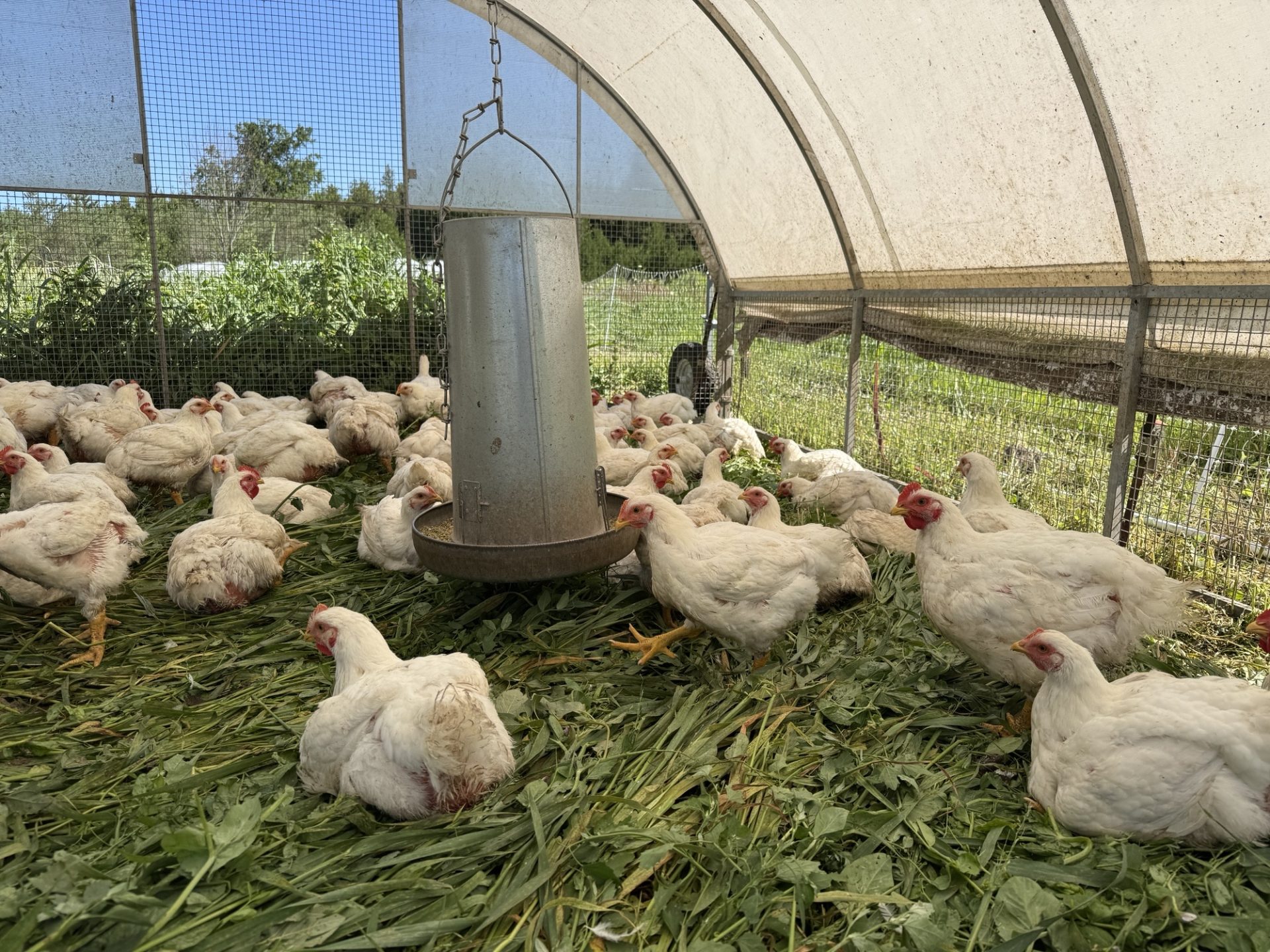
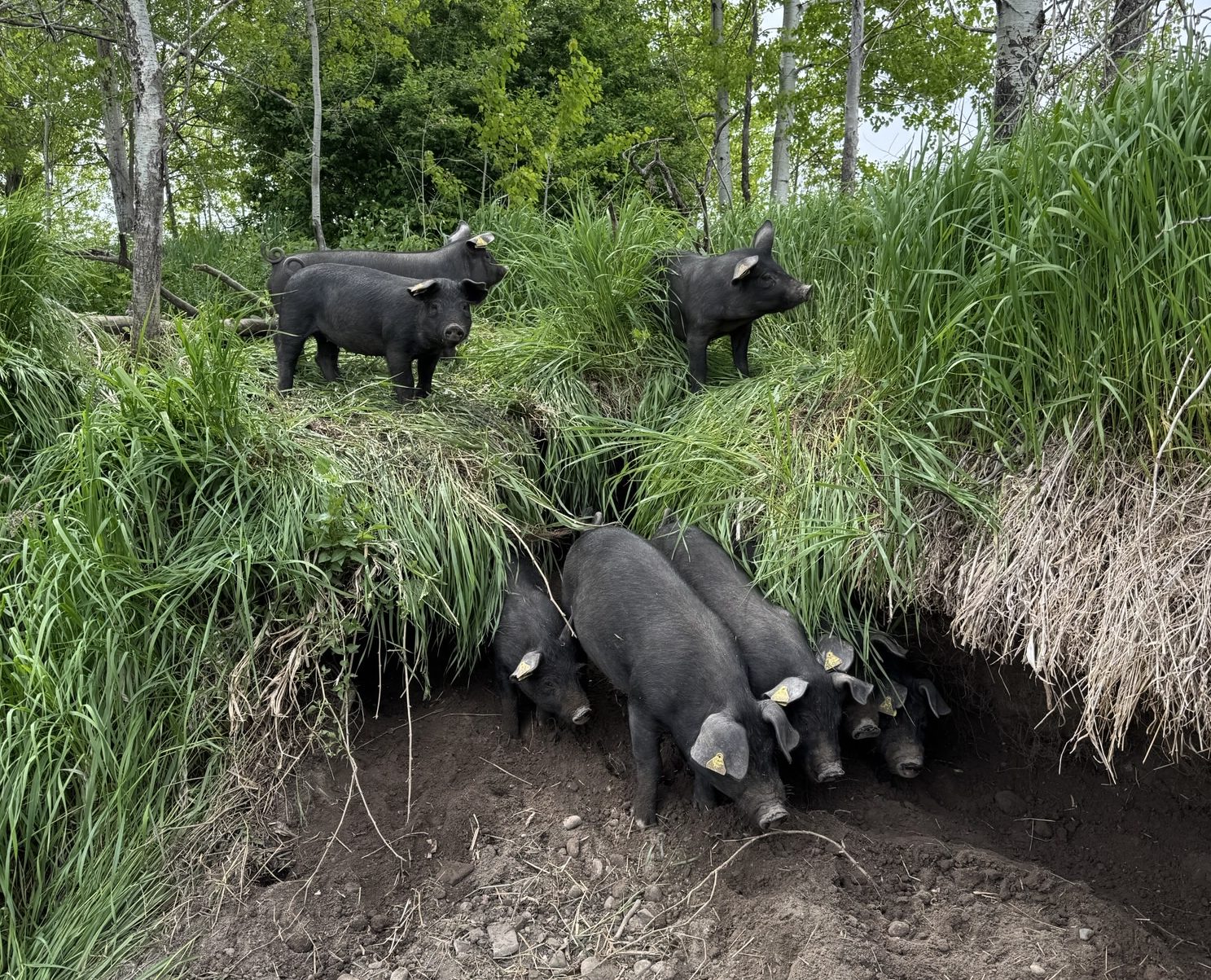
My farm is 48 acres, and the business is a sole proprietorship. I produce a diverse range of Asian vegetables on just under an acre, and I also produce pastured chicken, duck, pork and eggs. Everything is sold through my online store at brilliantmeadows.com.
I own my farm along with my partner. We rented out part of our farm to another market gardening couple for 4 years – they just moved onto their forever farm this winter! We had an agreement to trade labour for land, so when I was working full time, they would feed the animals; and once I switched to farming full time, we would undertake farm projects together. It was a beneficial set up for both of us and I think it’s a great example of alternative land access.
We found the farm by driving past it one day – I had not thought that there would be a farm that we could afford in the area but the property checked all the boxes that I was looking for. My parents generously gifted us most of the down payment and the rest of the property qualified for a traditional mortgage as it included a house. I spent the first 4 years working full time as an arborist and farming part time to build up the infrastructure and skills that would allow me to pivot to farming full time, which I did in 2024. The last couple of years, I have been also picked up off-season work in snow removal, which dovetails nicely with the seasonal demands of farming.
What types of ecological farm practices and/or responses to climate change realities do you engage in?
All of our veggies are grown without the use of chemical fertilizer, pesticides or herbicides. I practice minimal tillage with a lot of cover cropping and crop rotation for the gardens. Our animals are fed non-GMO grains grown by a local farm that mills their own soy-free rations full of a diverse mix of grains and seeds. It feels good to supply them with a high quality feed that was grown by someone I know! As well, I supplement the pigs with buttermilk from an independent creamery in the nearby town. It’s a great source of nutrition for pigs and it makes use of something that would otherwise become waste.
I think a lot about closing the loop on our farm and connecting the different systems of the farm in a symbiotic manner. Ideally, the waste of one system becomes the input to another. So for example, the crop rotation for the gardens is designed so that there are periods of cover crops that is then grazed by the pastured chickens or ducks. This way, the manure from the animals becomes the fertility input for the next growing season, while also improving the soil with cover cropping. Cover crops generally make great fodder for animals and I also think that pasturing chickens or ducks through the gardens reduces pest pressure for the following year as the birds also can dig up insects.
I have also been engaged with seed saving and am interested in locally adapting seeds to our new climate. When possible, I choose open pollinated varieties to ensure that those varieties continue to be sold. I am planning to do more of my own seed saving – especially for hard to find cultural crops. Some cultural crops are not well adapted to our region yet, so I am hoping I can improve my yields by saving my own seeds.
Why did you apply for business mentorship? What are your primary business goals for the season?
I often say that I love being a farmer but I do not enjoy running a business. I would love to farm under a different business structure, but for now I am a sole proprietorship so I need to improve my skills as a business owner. Every year I like to identify any roadblocks in my processes and find ways to make those steps easier either by buying new tools or changing how I do things. For example, flipping beds takes a lot of effort and I have access to more space this year so I have replanned the crop rotation to eliminate bed flipping. I think with the time saved, I will be able to manage a larger growing area. I am also hoping to do the same in the business related tasks like bookkeeping, advertising and general admin. My goal is to feel less burnt out by August!
What is the greatest challenge you face as a new farmer?
I think the biggest challenge is not knowing what you don’t know. It feels a little silly to say this but I learned the difference between bookkeeping and tallying the income and expenses during the business mentorship! I think there are lots of knowledge gaps that are present when you start a new farm, even if you’ve worked on other farms before. When I arrived at our farm, there was not a lot of infrastructure like fencing or water or power, and it took a lot of learning to put all of that into place. I had not realized that these were skills I had needed to learn until I needed to confront the issues, so there is a lot of learning on the fly.
What are some resources and business tools that have been helpful on your farming journey?
In Ontario we have an annual conference hosted by Ecological Farmers of Ontario (EFAO) and it is a wealth of knowledge every year! Also, you get to meet and talk shop with so many other farmers, which I find is a great way to learn and get ideas. I find attending EFAO field days very useful as well and I appreciate being able to go see other farms.
I subscribe to Growing for Market, a monthly magazine that comes out with great articles about growing vegetables or flowers. If you get an online subscription, you can also search the archives which is a great resource whenever I want to do a deeper dive into a specific crop.
How can we find out more about you, your farm, and its products?
I have a farm website at brilliantmeadows.com and I’m on instagram @brilliantmeadows