Filter by Popular Categories
Are you an aspiring native flower and grass seed farmer who wants hands on experience working the land close to the forest? Are you also interested in grain farming? Tamarack Farms near Erickson, Manitoba might be the place for you!
About the Farm
“We live and farm in the Treaty 2 area and the traditional territory of the Anishinaabe, Cree, Dakota and Metis Peoples and our farm is specifically located near Rolling River First Nation. We understand that we are living and farming on traditional lands that have been taken care of for time immemorial before the colonization of this place we now call Manitoba. We understand that our part in the colonization was and continues to be harmful and culturally destructive to all Indigenous peoples, including our neighbours at Rolling River First Nation and communities in Treaty 2. While it is often difficult to understand and know what we can do to reconcile our past and present colonizing actions, we try and make small actions and steps in this larger reconciliation process.” -Ryan Pengelly
Tamarack Farms is a family farm business located near Erickson, Manitoba. In 1979, Carol and Harvey Pengelly started Tamarack Farms. Ryan Pengelly and Alexandra Lozada returned to take over the farm in 2014. With a conservation-focused approach, Tamarack Farms maintains and protects over 50% of its land base (1440 acres) in aspen parkland forest and wetland ecosystems through conservation agreements with nature-based organizations. On the cultivated land, they farm using most of the regenerative principles by focusing on growing perennials, minimal tillage, intercropping annuals, and maintaining and increasing biodiversity.
They operate with two main enterprises in mind:
- growing and cleaning grains, oilseeds, and pulses for wholesale within Manitoba;
- growing and cleaning native grass and flower seed for conservation and ecosystem rehabilitation markets in Canada and the United States.
Currently, they grow and clean two perennial native brome grasses(120 acres) and one native sunflower (30 acres). They also grow several annual crops, including feed barley, yellow peas, and yellow mustard (about 250 acres per year). The remaining acres are in hay forage (300 acres) that they rent to local cattle farmers.
While no longer part of the business, the farm did heavily focus over the last 10 years on a diversity of enterprises and products such as pastured poultry and pork, organic grains (including quinoa), processing and packaging grains and flours, and direct marketing at farmer’s markets and selling to retail, bakeries, and restaurants. They are happy to share their knowledge from their previous farming enterprises as well.
Ryan grew up on the land where he is farming. He is bonded to the land and the community and is grateful to continue living and farming there. He has learned a lot emotionally, mentally and physically while farming with his Father, Harvey. He finds it a very fulfilling career and is enjoying figuring out ways to adapt and change according to his family’s needs.
Website: https://www.tamarackfarms.ca/
Workplace Culture
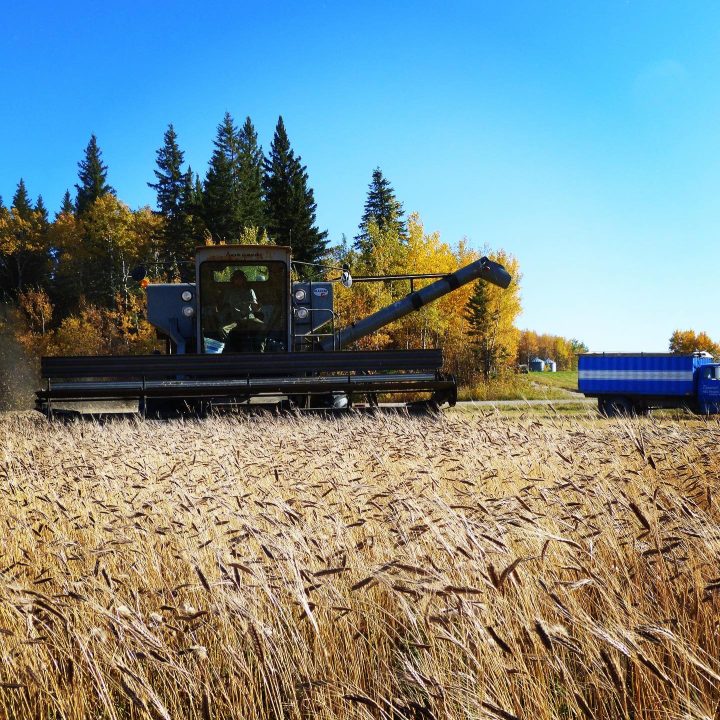
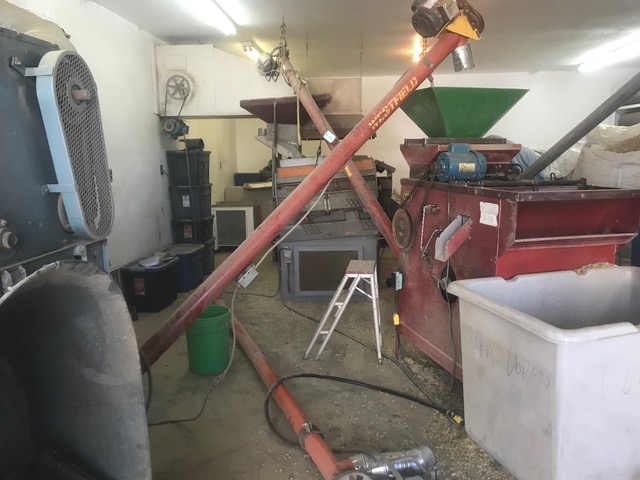
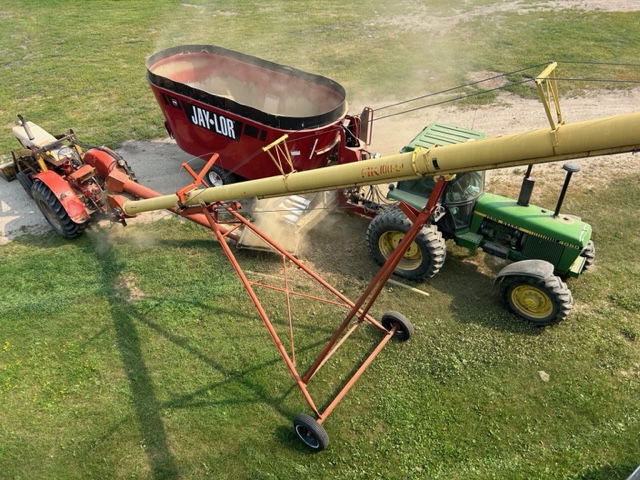
At Tamarack Farms the season moves between preparing machinery for seeding, seeding season (May-June), weed management season (May to July), seed cleaning season (August – December), harvest season (July – Oct) and office work, sales, and planning (December – April) They rely heavily on machinery, such as tractors, combines, seed cleaning equipment, augers, etc. Therefore machinery maintenance, operation and repair is a central and ongoing part of the business.
Harvey (Ryan’s Dad) is involved part time in the farm and might be leading a task with the apprentice. There may be another full time or part time employee.
Each morning there will be a thorough plan discussed as well as clear communication and check-ins. A lot of farming related books are available to borrow and read. Ryan is happy to answer any curious questions and engage in further conversations beyond the work day.
About the Farmers
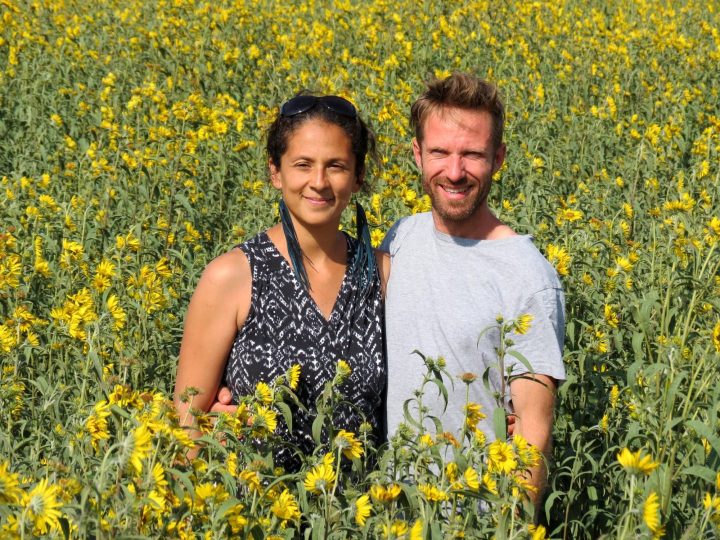
With a background in agriculture and natural resource management, Ryan Pengelly is a passionate farmer, business operator, and land steward. As a second generation farmer, Ryan farms with the direct support of his semi-retired parents (Harvey and Carol) and partner (Alexandra). For Ryan, the parkland landscape is home and guides the farming work and daily experience of the forests, fields, ponds, and wildlife.
When not farming, Ryan enjoys spending time with his family away from the farm or engaging in personal activities such as cross-country skiing and yoga.
About the Apprenticeship
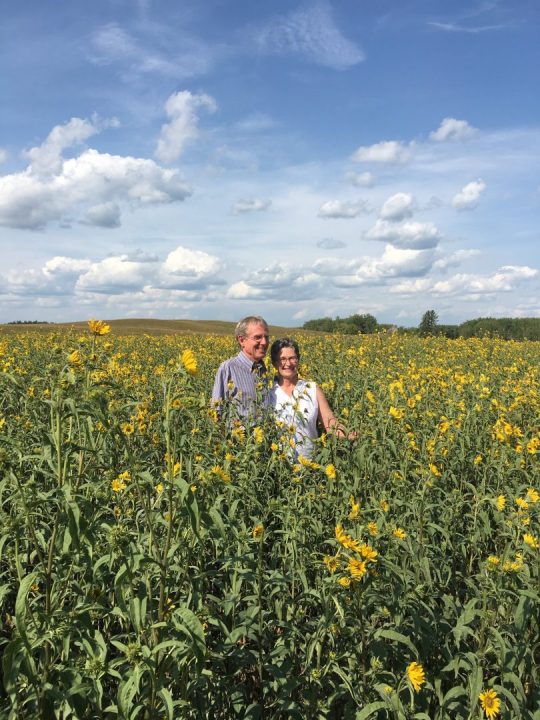
Apprentices will be assisting in all aspects of the farming seasons and activities, but the focus would be on tasks appropriate to that individual’s age and previous experience. Spring and early summer involves weed management (hand and chemical rogueing) in the sunflower and brome grass fields. The focus of summer and fall would be operating the seed cleaning facility and cleaning and bagging brome grass seed. Throughout all seasons, an apprentice might learn to maintain and operate machinery equipment.
The ideal duration of employment is May 1 – October 31st.
The job requirements are:
Ideally, Tamarack Farms is looking for an apprentice eligible to be supported by federal wage subsidy funding. This is someone who is a Canadian Citizen, Permanent Resident or Refugee, AND someone who is between 18 and 30 years old (inclusive)
Other requirements:
- has a full Class 5 driver’s license would be best, but they might be able to work around a situation in which a great candidate does not have a license.
- has prior agricultural experience would be wonderful.
- has experience operating, maintaining and repairing any form of machinery would be an asset.
- has plant identification experience would also be an asset.
- has a specific interest in native species agriculture would be ideal, but not necessary.
- Attention to detail and quality control would be important for certain jobs.
Apprentices are willing to learn these skills:
- Observing biodiversity
- Techniques to minimize tillage
- Crop planning & rotations
- Identifying desirable & undesirable plants
- Implementing weed control strategies
- Working in a zero/low-till system
- Cover-cropping
- Techniques for managing fertility
- Truck & tractor basic operation
- Truck & tractor troubleshooting & maintenance
Compensation
The wage will be $16 – $22/hour depending on experience
About the Community
Tamarack Farms is located approximately 10 minutes from the town of Erickson and the community of Rolling River First Nation. Erickson serves the town, surrounding agricultural community and Rolling River First Nation with several small restaurants, a bar, postal service, bank, groceries, thrift store, mechanic, schools, etc. Rolling River First Nation has a restaurant and annual, public powwow. The city of Brandon provides the larger city amenities about 1 hour away, while the town of Wasagaming and Riding Mountain National Park provide a beautiful touristic location about 30 minutes away with hiking, camping, lake beaches, restaurants, and movie theatre.

Accommodation
Accommodation details: there is not on-farm accommodation available.
The apprentice would rent a room or house in Erickson or surrounding area and commute to the farm.
Ryan (host farmer) and Sara (apprentice coordinator) can assist the apprentice in finding accommodations nearby.
Tamarack Farms looks forward to seeing you.